Marshall Space Flight Center

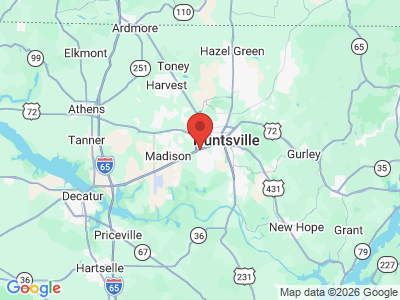
George C. Marshall Space Flight Center (MSFC) has been the heart of the U.S. space program since its beginnings in the 1960s. The center provided the rockets that took the first man to the Moon, developed the first space station (Skylab), and has been an integral part of the programs that oversee the Hubble Space Telescope, the space shuttle program, and, more recently, the Artemis program, which seeks to return humans to the Moon. Marshall has also played a role in making its home city of Huntsville, Madison County, one of the most socially and economically progressive cities in the South.
Located in north-central Alabama, the center is named for George C. Marshall, the chief of staff of the U.S. Army during World War II and Pres. Harry Truman’s secretary of state and secretary of defense. Marshall was also the creator of the Marshall Plan, the economic stimulus plan that helped bring many European countries out of financial and physical ruin after World War II.

MSFC shares land with Redstone Arsenal, a U.S. Army installation that produced munitions during World War II shifted to rocket research and development (R&D) during the early Cold War era. The Army Ballistic Missile Agency (ABMA), a facility on Redstone Arsenal, assisted with rocket and other space technology R&D; it housed the Army’s German “rocket team” led by Wernher von Braun, who oversaw development of the German military's V-2 rocket program. Under the leadership of U.S. general John B. Medaris and von Braun, the ABMA developed the Jupiter C rocket during the mid-1950s and launched the first American satellite Explorer 1 in January 1958. While with the Army and later the National Aeronautics and Space Administration (NASA), von Braun put together a team consisting of young American engineers from throughout the South and about 100 fellow German expatriates for the American space program. On July 1, 1960, less than two years after its founding, NASA established the Marshall Space Flight Center, naming von Braun as its first director. NASA absorbed the ABMA as the field center that would provide the technological and administrative foundation for Marshall.
The 1960s were NASA's boom years, and Marshall was designated as the agency's propulsion center, developing the rockets that would launch NASA's missions into space. MSFC helped make history in 1961 when its Mercury-Redstone rocket, based on the Jupiter C rocket, powered Alan B. Shepard into suborbital flight, making him the first American in space. Marshall's major task during the 1960s was the development of the Saturn rockets that were used in the Apollo moon missions. They aimed to fulfill Pres. John F. Kennedy's challenge to NASA to execute a moon landing by the end of the decade.

The Saturn V, the culmination of the Saturn series, is a technological marvel of the space age. Its first stage alone incorporated a cluster of five engines, each of which generated 1.5 million pounds of thrust. Marshall engineers performed many of the tests of the Saturn engines on enormous test stands on the south end of the center; the tests produced a deafening roar that shook the city of Huntsville. Saturn V rockets powered each of the 13 Apollo missions launched between 1967 and 1973, including the first Moon landing on July 20, 1969. On the last three Apollo missions in 1971 and 1972, astronauts explored the lunar surface in a lunar roving vehicle (LRV) designed at Marshall.

Marshall's extraordinary technological achievements often overshadow the sociopolitical gains brought to Huntsville by the center. During the early 1960s, the federal government threatened to shift Marshall projects to other centers unless Alabama made progress in civil rights, and Marshall's presence mitigated civil rights problems in north Alabama. While Gov. George Wallace preached segregation, and Montgomery, Birmingham, and Selma erupted in violence, businessmen in Huntsville sought to preserve federal contracts by avoiding racial strife. The strategy paid off, and Huntsville became a New South success story. High-tech companies proliferated, and the town prospered. Its population doubled during the 1960s to more than 140,000. Despite these successes, questions and concerns lingered about the degree to which von Braun and his German colleagues had sympathized with the Nazi philosophy.
In the late 1960s, as Marshall completed Saturn development, the center underwent a painful transition. Reductions-in-force cut into the workforce, and many Germans from the original von Braun team retired or took lesser assignments. In 1970, von Braun left Marshall to take a position at NASA's Washington, D.C., headquarters.

Under von Braun, the center had begun to explore the possibilities of branching out into fields outside of propulsion. By the early 1970s, Marshall executives realized that propulsion work alone was unlikely to sustain the center, and indeed NASA later considered closing MSFC. During the 1970s and into the early 1980s, the center developed specializations in space science (the scientific exploration of the solar system and beyond), materials research (experiments with semiconductors, glasses and ceramics, metals and alloys, and polymers in the microgravity environment of space), and other fields that soon made Marshall NASA's most diversified field center.
In 1973, the MSFC helped salvage Skylab, an early attempt at a space station that was made from a refurbished Saturn third-stage rocket. Skylab's solar panels were damaged during launch on May 14, 1973, and the station began to overheat to dangerous levels when it reached orbit. In a dramatic rescue effort, engineers at Marshall devised a parasol to shield Skylab from solar radiation and realigned the craft. During the next nine months, three crews of three people logged more than 171 days aboard Skylab, demonstrating that humans could adapt to long periods of time in space.
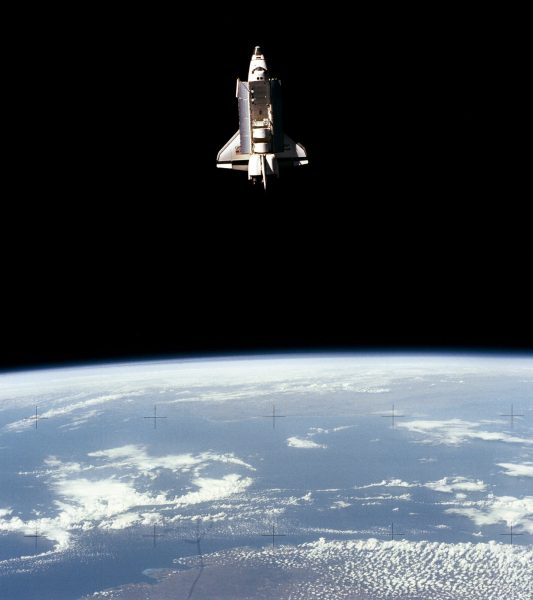
In the early 1980s, MSFC researchers led the development of Spacelab, a self-contained portable laboratory that could be fitted into the newly developed fleet of space shuttles. A joint venture between NASA and the European Space Agency (ESA), Spacelab served as an interim step on the way to the development of the International Space Station (ISS). Marshall served as NASA's lead center for Spacelab development, with ESA taking charge of design and development duties. Nestled into the shuttle's cargo bay, Spacelab carried experiments aloft and allowed astronaut scientists to work out of their space suits. Between 1982 and 1998, Spacelab flew on 28 shuttle missions.

Despite broadening its research activities, Marshall continued to serve as NASA's principal propulsion center. When the space shuttle program was fully approved, NASA assigned Marshall to develop the major propulsion system. Marshall's duties changed, however, from development to primarily overseeing contractors, reflecting a general trend within NASA to curtail in-house development. As a result, NASA's workforce declined from a peak of 7,327 in 1965 to less than half that figure by the mid-1990s. Contracting offices began to proliferate in Huntsville, with many contractors continuing to work for Marshall and the Redstone Arsenal in various capacities as well. These contracting offices represented major national aerospace companies and helped local entrepreneurs launch high tech companies. To accommodate the shift in the local aerospace industry, Huntsville established a 3,000-acre research park in 1962, and in 1973 named it in memory of former Brown Engineering CEO Milton K. Cummings. Expansion brought its acreage to 3,843, and it now ranks as the second-largest research park in the United States. In 1979, future astronaut Jan Davis began working as an engineer for Marshall, eventually serving as team leader for several important efforts, including the Hubble Space Telescope.

Marshall experienced one of its worst tragedies on January 28, 1986, when the space shuttle Challenger (OV-099) exploded 73 seconds after liftoff. A subsequent investigation by a presidential board (the Rogers Commission) demonstrated that the cause of the explosion was burn-through of O-ring seals on the Solid Rocket Booster (SRB), and because this component was under Marshall's purview, the investigation focused on the center. Director William R. Lucas and some of his leading assistants resigned in the aftermath, and Marshall faced criticism for pressuring SRB contractor Morton-Thiokol to approve a cold-weather launch. In truth the story was more complicated, and communications issues that highlighted the investigation were only a partial explanation; the O-ring problem was a known risk, one that NASA had accepted. Marshall led the redesign of the SRB, with Davis leading the project focusing on the O-rings, that enabled the shuttle Discovery (OV-103) to return to space flight on September 29, 1988.
Marshall also endured criticism for its performance as the lead center in the development of the Hubble Space Telescope, a shuttle-launched instrument capable of allowing scientists to peer into deep space without interference from Earth's atmosphere. Soon after launch in April 1990, scientists encountered a problem generated by a malfunction of the equipment used to polish Hubble's mirror; the telescope's vision was flawed. Adjustments and repairs made to Hubble during a shuttle Endeavour (OV-105) mission in 1993 restored its sight, and Hubble produced astonishing images from distant galaxies. That shuttle mission included Alabama astronaut Kathryn Thornton, a native of Montgomery.
Later in the 1990s, the center played an important role in the development of the ISS and continues directing its science operations. MSFC became NASA's lead center for microgravity research and remains prominent in investigations of advanced propulsion technology. Marshall's role in space science has expanded with such projects as the Chandra X-ray Observatory and Gravity Probe B, which confirmed some of Einstein's theories about the structure of the universe. In 2011, Marshall began development of the Space Launch System (SLS) initiative, a super heavy lift rocket, which provides next-generation propulsion for crewed missions to other parts of Earth's Solar System. (The SLS rocket, NASA’s most powerful to date, was launched from Kennedy Space Center in November 2022.)
In September 2018, MSFC deputy director Jody Singer was named the facility’s first woman director. She had been appointed deputy director in 2016 and had been acting director since July 2018. Singer served in that capacity until 2023.
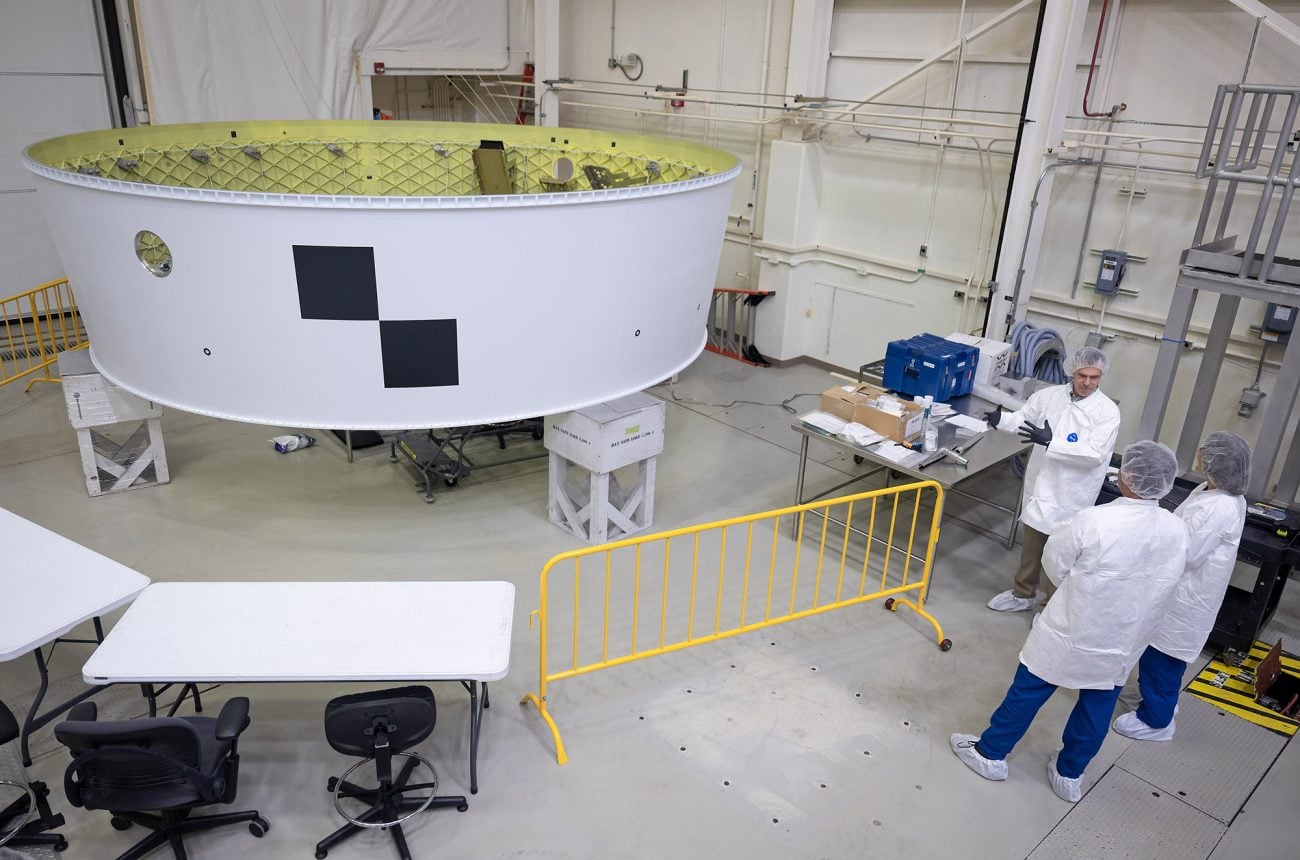
As of 2026, Marshall continues to play a pivotal role in the Artemis program. Begun in 2017, the effort aims to land Americans on the Moon in 2028. In 2024, Marshall shipped the core stage of the Artemis II rocket and a stage adaptor that connects the rocket’s core stage to the upper stage to Kennedy Space Center. In conjunction with these efforts, scientists at Marshall contribute to enhancing human lunar expedition by studying the Moon’s seismic events and surface environment as well as experimenting with communication networks or Lunar Node 1 (LN-1) for the Artemis missions.
Additionally, Marshall assists with deep-space exploration projects. Launched in 2024, NASA’s Advanced Composite Solar Sail System is designed to use sunlight to propel the vessel through space. Algorithms developed at Marshall control the sail and navigate the spacecraft. Marshall’s Science Mission Directorate oversees the Juno spacecraft mission. As part of NASA’s New Frontiers program, the Juno mission seeks to learn more about the origins and evolution of Jupiter, our solar system, and giant planets. Launched in 2011, it entered Jupiter’s orbit in 2016 and completed its second mission extension in September 2025.
Marshall leadership continues to coordinate with private-space companies Blue Origin and SpaceX for the Artemis missions and future space endeavors. Blue Origin and SpaceX, under the management of the Human Landing System (HLS) program at Marshall, are contracted to develop landers that will deliver large pieces of equipment and infrastructure to the lunar surface. Marshall’s Commercial Crew Program (CCP) partners with private space companies to develop commercial space transportation capabilities to and from the ISS. In 2024, SpaceX launched a successful crewed mission to the ISS with the support of the CCP.
Even in an era of tight budgets, such projects have allowed Alabama political leaders and business interests to fend off attempts to reduce MSFC's role and have enabled administrators to negotiate new work as the center upgrades its facilities.
Additional Resources
- Bilstein, Roger E. Stages to Saturn: A Technological History of the Apollo/Saturn Launch Vehicles. Washington, D.C.: Scientific and Technical Information Branch, National Aeronautics and Space Administration, 1980.
- Dunar, Andrew J., and Stephen P. Waring. Power to Explore: A History of Marshall Space Flight Center, 1960-1990. Washington, D.C.: Scientific and Technical Information Branch, National Aeronautics and Space Administration, 1999.
- Stuhlinger, Ernst, and Frederick I. Ordway. Wernher von Braun, Crusader for Space: A Biographical Memoir. Malabar, Fla.: Krieger Publishing Company, 1994.