Anniston Museum of Natural History
 Anniston Museum of Natural History
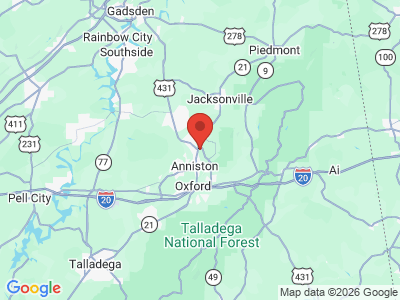
The Anniston Museum of Natural History is part of Anniston Museums and Gardens in Anniston, Calhoun County. It is home to displays that range from Egyptian mummies, to dinosaur bones, to an extensive collection of mounted birds. The museum's origins date to 1915, when H. Sever Regar of Norristown, Pennsylvania, began displaying his personal collection of historical artifacts, along with the more than 1,800 specimens of bird taxidermy collected by naturalist William H. Werner. When Regar moved his textile business to Anniston in 1929, he donated the collection to the city. The Regar Museum opened in 1930 in Anniston's Carnegie Library.
Anniston Museum of Natural History
The Anniston Museum of Natural History is part of Anniston Museums and Gardens in Anniston, Calhoun County. It is home to displays that range from Egyptian mummies, to dinosaur bones, to an extensive collection of mounted birds. The museum's origins date to 1915, when H. Sever Regar of Norristown, Pennsylvania, began displaying his personal collection of historical artifacts, along with the more than 1,800 specimens of bird taxidermy collected by naturalist William H. Werner. When Regar moved his textile business to Anniston in 1929, he donated the collection to the city. The Regar Museum opened in 1930 in Anniston's Carnegie Library.
 "Environments of Africa" Hall
The museum's collections expanded at the library until 1965, when Anniston consolidated its city and county libraries. The museum's holdings were then moved to the Calhoun County Memorial Building, the former site of the county library. Control of the museum was given to a museum board of directors that included John B. Lagarde, who donated his collection of mounted African animals on the condition that they be housed in a new facility. Construction for a permanent museum site began on 185 acres of federal land near Fort McClellan in January 1976, and by December the collections had been transferred and the Anniston Museum of Natural History had opened. The grounds were named the John B. Lagarde Interpretive Park, and they currently include hiking trails, gardens, and picnic areas.
"Environments of Africa" Hall
The museum's collections expanded at the library until 1965, when Anniston consolidated its city and county libraries. The museum's holdings were then moved to the Calhoun County Memorial Building, the former site of the county library. Control of the museum was given to a museum board of directors that included John B. Lagarde, who donated his collection of mounted African animals on the condition that they be housed in a new facility. Construction for a permanent museum site began on 185 acres of federal land near Fort McClellan in January 1976, and by December the collections had been transferred and the Anniston Museum of Natural History had opened. The grounds were named the John B. Lagarde Interpretive Park, and they currently include hiking trails, gardens, and picnic areas.
 Egyptian Mummies at the Anniston Museum of Natural History
Expansion over the next two decades resulted in the addition of seven halls, the last of which was completed in 2000. During that time, the museum has continued to acquire artifacts and artwork. Highlights include models of dinosaurs such as Albertosaurus, a carnivore that stood nearly 20 feet tall, and a winged pteranodon; Werner's ornithological specimens, which include species of endangered and extinct birds; a hands-on Children's Discovery Area; and two Egyptian mummies from about 300 BCE. Other halls feature animals of Africa, hunting and defense adaptations of animals, and the ecological history of Alabama. The museum also brings in touring exhibits, such as a more than three-month visit from "A T-Rex Named Sue," a replica of a skeleton residing at Chicago's Field Museum which nearly doubled the number of visitors to the museum in 2007. The remains, the largest Tyrannosaurus rex ever found, were named for paleontologist Sue Hendrickson, who discovered them in South Dakota in 1990.
Egyptian Mummies at the Anniston Museum of Natural History
Expansion over the next two decades resulted in the addition of seven halls, the last of which was completed in 2000. During that time, the museum has continued to acquire artifacts and artwork. Highlights include models of dinosaurs such as Albertosaurus, a carnivore that stood nearly 20 feet tall, and a winged pteranodon; Werner's ornithological specimens, which include species of endangered and extinct birds; a hands-on Children's Discovery Area; and two Egyptian mummies from about 300 BCE. Other halls feature animals of Africa, hunting and defense adaptations of animals, and the ecological history of Alabama. The museum also brings in touring exhibits, such as a more than three-month visit from "A T-Rex Named Sue," a replica of a skeleton residing at Chicago's Field Museum which nearly doubled the number of visitors to the museum in 2007. The remains, the largest Tyrannosaurus rex ever found, were named for paleontologist Sue Hendrickson, who discovered them in South Dakota in 1990.
In 1991 the museum received accreditation from the American Association of Museums and in 2002 it became the first Smithsonian Institution affiliate in Alabama. Since the late 1990s the museum has seen about 60,000 visitors per year. The Berman Museum of World History, founded by Anniston native Farley Berman, also is part of the Anniston Museums and Gardens in Lagarde Park and features artwork and ancient weaponry among its artifacts.