Selma
 Edmund Pettus Bridge, Selma
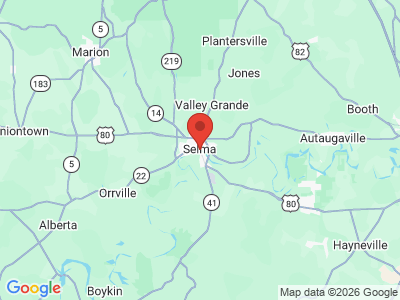
Located on a high bluff that overlooks the Alabama River, 50 miles west of Montgomery, historic Selma is the county seat of Dallas County. From the Civil War to the modern civil rights era, Selma has played an important role in American history. Selma is probably best known as the site of the infamous "Bloody Sunday" attack on civil rights marchers at Selma's Edmund Pettus Bridge on March 7, 1965, and the subsequent Selma-to-Montgomery March. In 2000, the city elected its first Black mayor, marking a positive change from those turbulent days. In 2015, Pres. Barack Obama and other national figures participated in the celebration of the 50th anniversary and re-enactment of the march. Selma is led by a mayor-council form of government.
Edmund Pettus Bridge, Selma
Located on a high bluff that overlooks the Alabama River, 50 miles west of Montgomery, historic Selma is the county seat of Dallas County. From the Civil War to the modern civil rights era, Selma has played an important role in American history. Selma is probably best known as the site of the infamous "Bloody Sunday" attack on civil rights marchers at Selma's Edmund Pettus Bridge on March 7, 1965, and the subsequent Selma-to-Montgomery March. In 2000, the city elected its first Black mayor, marking a positive change from those turbulent days. In 2015, Pres. Barack Obama and other national figures participated in the celebration of the 50th anniversary and re-enactment of the march. Selma is led by a mayor-council form of government.
The Selma City Council consists of eight members elected from wards and a president elected by a citywide vote. Author Kathryn Tucker Windham, Auburn football coach Ralph "Shug" Jordan, and soccer player Mia Hamm were born in Selma.
History
 William Rufus King
Selma was first recorded on a map in 1732 as Ecor Bienville, in honor of the then-French provincial governor Jean-Baptiste Le Moyne de Bienville. In the early 1800s, European settlers begin to frequent the site, by then referred to as "High Soap Stone Bluff." The site became known as "Moore's Bluff" when Thomas Moore, a settler from Tennessee, built a cabin there in 1815. Two years later, a group of influential settlers, including future vice president William Rufus King, formed the Selma Town Land Company to buy up land to establish a town above the river. On December 4, 1820, Selma was incorporated by the state legislature.
William Rufus King
Selma was first recorded on a map in 1732 as Ecor Bienville, in honor of the then-French provincial governor Jean-Baptiste Le Moyne de Bienville. In the early 1800s, European settlers begin to frequent the site, by then referred to as "High Soap Stone Bluff." The site became known as "Moore's Bluff" when Thomas Moore, a settler from Tennessee, built a cabin there in 1815. Two years later, a group of influential settlers, including future vice president William Rufus King, formed the Selma Town Land Company to buy up land to establish a town above the river. On December 4, 1820, Selma was incorporated by the state legislature.
 First Baptist Church of Selma
Selma's initial growth and development were hampered by its proximity to Alabama's first capital at Cahawba (Cahaba), 10 miles away at the junction of the Alabama and Cahaba rivers. When the state capital moved to Tuscaloosa in 1826, Selma began to rival it for county supremacy, even though Cahaba retained its status as county seat until 1866. Selma's economy was stimulated by the emergence of the cotton trade throughout Alabama's Black Belt. Further boosts to its early economy included steadily increasing steamboat traffic on the river throughout the 1820s and 1830s and the chartering of the Selma and Tennessee Rivers Railroad in 1836. The railroad's operation was temporarily suspended and Selma's modest economic boom ended as a result of the depression following the Panic of 1837. However, in the 1840s and 1850s Selma rebounded, with its cotton trade and its population doubling by 1860.
First Baptist Church of Selma
Selma's initial growth and development were hampered by its proximity to Alabama's first capital at Cahawba (Cahaba), 10 miles away at the junction of the Alabama and Cahaba rivers. When the state capital moved to Tuscaloosa in 1826, Selma began to rival it for county supremacy, even though Cahaba retained its status as county seat until 1866. Selma's economy was stimulated by the emergence of the cotton trade throughout Alabama's Black Belt. Further boosts to its early economy included steadily increasing steamboat traffic on the river throughout the 1820s and 1830s and the chartering of the Selma and Tennessee Rivers Railroad in 1836. The railroad's operation was temporarily suspended and Selma's modest economic boom ended as a result of the depression following the Panic of 1837. However, in the 1840s and 1850s Selma rebounded, with its cotton trade and its population doubling by 1860.
 Selma Naval Foundry
By the beginning of the Civil War, Selma had become a transportation center and went on to become one of the main military manufacturing centers supporting the South's war effort. Its foundries produced much-needed supplies, particularly iron and munitions, and its Navy yard constructed Confederate warships, including the ironclad CSS Tennessee, and outfitted the CSS Nashville. Selma's importance to the South made it one of the main targets of Gen. James H. Wilson's raid into Alabama in the final weeks of the war. On April 2, 1865, Wilson attacked forces under Gen. Nathan Bedford Forrest who were defending Selma and captured the city along with 2,700 Confederate prisoners. Wilson's forces then proceeded to burn many of the town's residences and private businesses, as well as the Confederate arsenal and naval foundry. Ironically, the war ended just a few days later, but it would take Selma many years to recover from the devastation. Much of the economy in surrounding Dallas County then became centered on the system of sharecropping and tenant farming, which that kept the mostly Black population impoverished into the middle of the twentieth century, although some Blacks would eventually come to own land. Also during that time, many landowners increasingly turned to cattle ranching, which further displaced Black cotton farmers in the increasingly racially segregated and economically stratified Selma.
Selma Naval Foundry
By the beginning of the Civil War, Selma had become a transportation center and went on to become one of the main military manufacturing centers supporting the South's war effort. Its foundries produced much-needed supplies, particularly iron and munitions, and its Navy yard constructed Confederate warships, including the ironclad CSS Tennessee, and outfitted the CSS Nashville. Selma's importance to the South made it one of the main targets of Gen. James H. Wilson's raid into Alabama in the final weeks of the war. On April 2, 1865, Wilson attacked forces under Gen. Nathan Bedford Forrest who were defending Selma and captured the city along with 2,700 Confederate prisoners. Wilson's forces then proceeded to burn many of the town's residences and private businesses, as well as the Confederate arsenal and naval foundry. Ironically, the war ended just a few days later, but it would take Selma many years to recover from the devastation. Much of the economy in surrounding Dallas County then became centered on the system of sharecropping and tenant farming, which that kept the mostly Black population impoverished into the middle of the twentieth century, although some Blacks would eventually come to own land. Also during that time, many landowners increasingly turned to cattle ranching, which further displaced Black cotton farmers in the increasingly racially segregated and economically stratified Selma.
 Amelia Boynton Robinson
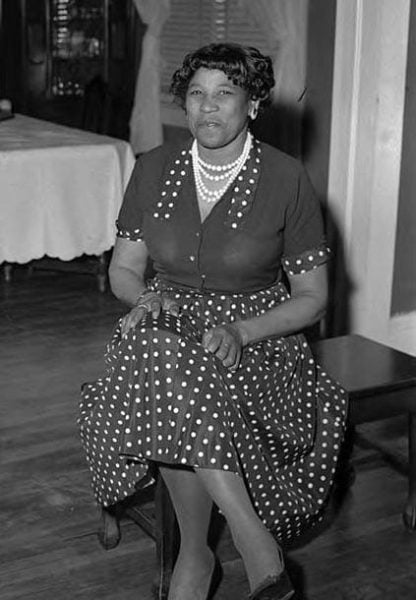
In the 1920s, postal worker Charles J. Adams, who served as Selma's representative to the National Association for the Advancement of Colored People, founded the Dallas County Voters League (DCVL) to address racial discrimination in voter registration in the county. The organization made little progress, however, and Adams left the state to avoid continued harassment from White authorities. He was succeeded by Sam Boynton, who with his wife Amelia, continued the effort, again, with little progress. The DCVL became more active in the later 1950s after the Montgomery Bus Boycott, and in December 1958, DCVL members and many other individuals testified to the U.S. Civil Rights Commission investigating voter discrimination in Alabama. In the early 1960s, national civil rights groups turned their attention to Selma after the Dallas County Voters League (DCVL) sought outside assistance to register Black voters. Also during this time, J. L. Chestnut Jr. And Bruce C. Boynton became the first two Black lawyers in the city in the modern era. Subsequently, Student Nonviolent Coordinating Committee field organizers Bernard Lafayette Jr. and his wife Colia arrived in February 1963 to assist in voter registration efforts, followed by James Forman and John Lewis, who was in Selma by the summer of 1964. The city was soon host to demonstrations and marches numbering in the hundreds. Also at the invitation of the DCVL and the more moderate Dallas County Improvement Association, Southern Christian Leadership Conference officials including James Bevel, Diane Nash, and Hosea Williams came to Selma to join in the voting rights campaign. Most notably, Martin Luther King Jr. returned to Selma with Ralph Abernathy in January 1965 and their arrest on February 1, along with hundreds of other demonstrators for parading without a permit, brought national media attention to Selma and the struggle for Black voting rights. King intended to get arrested for the media coverage and his previously written "A Letter from a Selma, Alabama, Jail" was published in a New York Times advertisement several days later. Following Congressional delegations visiting Selma, legislation was introduced to allow federal officials to register voters and establish a federal registration election commission, but neither was enacted.
Amelia Boynton Robinson
In the 1920s, postal worker Charles J. Adams, who served as Selma's representative to the National Association for the Advancement of Colored People, founded the Dallas County Voters League (DCVL) to address racial discrimination in voter registration in the county. The organization made little progress, however, and Adams left the state to avoid continued harassment from White authorities. He was succeeded by Sam Boynton, who with his wife Amelia, continued the effort, again, with little progress. The DCVL became more active in the later 1950s after the Montgomery Bus Boycott, and in December 1958, DCVL members and many other individuals testified to the U.S. Civil Rights Commission investigating voter discrimination in Alabama. In the early 1960s, national civil rights groups turned their attention to Selma after the Dallas County Voters League (DCVL) sought outside assistance to register Black voters. Also during this time, J. L. Chestnut Jr. And Bruce C. Boynton became the first two Black lawyers in the city in the modern era. Subsequently, Student Nonviolent Coordinating Committee field organizers Bernard Lafayette Jr. and his wife Colia arrived in February 1963 to assist in voter registration efforts, followed by James Forman and John Lewis, who was in Selma by the summer of 1964. The city was soon host to demonstrations and marches numbering in the hundreds. Also at the invitation of the DCVL and the more moderate Dallas County Improvement Association, Southern Christian Leadership Conference officials including James Bevel, Diane Nash, and Hosea Williams came to Selma to join in the voting rights campaign. Most notably, Martin Luther King Jr. returned to Selma with Ralph Abernathy in January 1965 and their arrest on February 1, along with hundreds of other demonstrators for parading without a permit, brought national media attention to Selma and the struggle for Black voting rights. King intended to get arrested for the media coverage and his previously written "A Letter from a Selma, Alabama, Jail" was published in a New York Times advertisement several days later. Following Congressional delegations visiting Selma, legislation was introduced to allow federal officials to register voters and establish a federal registration election commission, but neither was enacted.
 Bloody Sunday
Provoked by the death of activist Jimmie Lee Jackson in February 1965, Bevel promoted a voting rights march from Selma to Montgomery, which was organized with the help of the DCVL. On Sunday, March 7, 1965, approximately 600 marchers set out from Brown Chapel AME Church east on U.S. Highway 80, headed for Montgomery to petition the legislature for reforms in the voter-registration process. They were met just six blocks outside of town at the Edmund Pettus Bridge by state and local law enforcement and were turned back with billy clubs and tear gas; the national press soon began calling the day "Bloody Sunday." Ten days later, U.S. District Judge Frank M. Johnson Jr. granted an order authorizing the march to Montgomery. On March 25, 1965, some 25,000 marchers crossed the Edmund Pettus Bridge on their way to Montgomery.
Bloody Sunday
Provoked by the death of activist Jimmie Lee Jackson in February 1965, Bevel promoted a voting rights march from Selma to Montgomery, which was organized with the help of the DCVL. On Sunday, March 7, 1965, approximately 600 marchers set out from Brown Chapel AME Church east on U.S. Highway 80, headed for Montgomery to petition the legislature for reforms in the voter-registration process. They were met just six blocks outside of town at the Edmund Pettus Bridge by state and local law enforcement and were turned back with billy clubs and tear gas; the national press soon began calling the day "Bloody Sunday." Ten days later, U.S. District Judge Frank M. Johnson Jr. granted an order authorizing the march to Montgomery. On March 25, 1965, some 25,000 marchers crossed the Edmund Pettus Bridge on their way to Montgomery.
Economic Development
 Joseph T. Smitherman Historic Building
Like most areas of the state, Selma's economy improved in the years after the Civil War when cotton prices began to rise in the early twentieth century. In the first decade of the twentieth century, Selma's population grew by 56 percent, increasing from 8,713 in 1900 to 13,649 in 1910. Two new banks were established to support the increasing population. Economic problems resurfaced in the 1910s with the arrival of the boll weevil, which decimated the area's cotton crop. To survive, area farmers began growing soybeans, timber, and other crops that flourished in the area's rich prairie soil. Whereas most large landowners survived the boll weevil's assault, many small farmers did not. Then, in 1915, Selma's branch of the Penny Savings Bank of Birmingham and the first Black-owned financial institution in the state, failed, proving disastrous for hundreds of middle-class Black citizens. To make matters worse, the Alabama River flooded in September 1916. These unfortunate events combined with the spread of violence directed toward Blacks that accompanied the economic hard times to drive the so-called Great Migration of thousands of Black citizens out of Selma and other southern cities and into the industrial centers of many large Midwestern cities.
Joseph T. Smitherman Historic Building
Like most areas of the state, Selma's economy improved in the years after the Civil War when cotton prices began to rise in the early twentieth century. In the first decade of the twentieth century, Selma's population grew by 56 percent, increasing from 8,713 in 1900 to 13,649 in 1910. Two new banks were established to support the increasing population. Economic problems resurfaced in the 1910s with the arrival of the boll weevil, which decimated the area's cotton crop. To survive, area farmers began growing soybeans, timber, and other crops that flourished in the area's rich prairie soil. Whereas most large landowners survived the boll weevil's assault, many small farmers did not. Then, in 1915, Selma's branch of the Penny Savings Bank of Birmingham and the first Black-owned financial institution in the state, failed, proving disastrous for hundreds of middle-class Black citizens. To make matters worse, the Alabama River flooded in September 1916. These unfortunate events combined with the spread of violence directed toward Blacks that accompanied the economic hard times to drive the so-called Great Migration of thousands of Black citizens out of Selma and other southern cities and into the industrial centers of many large Midwestern cities.
 Kingston House
After a brief respite from its economic woes during World War I, Selma suffered through the Great Depression, losing two of its major employers in the textile industry. Selma's economy improved as the United States prepared to enter World War II, and the U.S. Army Air Force established a training base there in 1941. This installation was named Craig Field in honor of Selma native Bruce Kilpatrick Craig, a test engineer who had recently lost his life in the crash of a B-24 bomber near San Diego, California. Before the end of World War II, more than 9,000 pilots had earned their wings at Selma's airbase. Craig Field continued to be a major source of jobs and income for Selma residents until its closure in 1977. Today, the site is home to the Craig Industrial Complex, comprising more than 700 acres zoned for industrial development. Occupants include businesses, a governmental training center, an elementary school, and a golf course. After its closure, Selma officials decided to take advantage of Selma's more than 1,200 historic structures to establish a tourism industry, emphasizing its role in both the Civil War and the civil rights movement.
Kingston House
After a brief respite from its economic woes during World War I, Selma suffered through the Great Depression, losing two of its major employers in the textile industry. Selma's economy improved as the United States prepared to enter World War II, and the U.S. Army Air Force established a training base there in 1941. This installation was named Craig Field in honor of Selma native Bruce Kilpatrick Craig, a test engineer who had recently lost his life in the crash of a B-24 bomber near San Diego, California. Before the end of World War II, more than 9,000 pilots had earned their wings at Selma's airbase. Craig Field continued to be a major source of jobs and income for Selma residents until its closure in 1977. Today, the site is home to the Craig Industrial Complex, comprising more than 700 acres zoned for industrial development. Occupants include businesses, a governmental training center, an elementary school, and a golf course. After its closure, Selma officials decided to take advantage of Selma's more than 1,200 historic structures to establish a tourism industry, emphasizing its role in both the Civil War and the civil rights movement.
Demographics
According to 2020 Census estimates, Selma recorded a population of 17,762. Of that number, 83.4 percent identified themselves as African American, 14.7 percent as White, 1.4 percent as Asian, 0.4 percent as Hispanic, 0.2 percent as two or more races, 0.2 percent as Native American, and 0.1 as Native Hawaiian and Other Pacific Islander. The city's median household income was $26,581, and per capita income was $18,063.
Employment
According to 2020 Census estimates, the workforce in Selma was divided among the following industrial categories:
- Educational services, and health care and social assistance (23.7 percent)
- Manufacturing (23.3 percent)
- Professional, scientific, management, and administrative and waste management services (8.9 percent)
- Retail trade (8.6 percent)
- Finance, insurance, and real estate, rental, and leasing (6.4 percent)
- Construction (5.8 percent)
- Transportation and warehousing and utilities (5.8 percent)
- Arts, entertainment, recreation, accommodation, and food services (5.3 percent)
- Other services, except public administration (4.8 percent)
- Public administration (3.7 percent)
- Agriculture, forestry, fishing and hunting, and extractive (1.5 percent)
- Information (1.3 percent)
- Wholesale trade (1.0 percent)
Education
 Selma University
The Selma City School system operates eight schools, employs 130 teachers, and serves more than 2,200 students. Higher educational institutions in and around Selma are Wallace Community College and Selma University, a historically Black institution founded in 1878 and affiliated with the Alabama State Missionary Baptist Convention. Concordia College, founded in 1922 and operated by the Lutheran Church, closed its doors in 2018. Daniel Payne College was established in Selma in 1889 by the African Methodist Episcopal Church and operated there until 1922, when it relocated to Birmingham. It closed in 1977 for financial reasons.
Selma University
The Selma City School system operates eight schools, employs 130 teachers, and serves more than 2,200 students. Higher educational institutions in and around Selma are Wallace Community College and Selma University, a historically Black institution founded in 1878 and affiliated with the Alabama State Missionary Baptist Convention. Concordia College, founded in 1922 and operated by the Lutheran Church, closed its doors in 2018. Daniel Payne College was established in Selma in 1889 by the African Methodist Episcopal Church and operated there until 1922, when it relocated to Birmingham. It closed in 1977 for financial reasons.
Transportation
Selma is connected by U.S. Highway 80 to Montgomery, 50 miles to the east, where travelers can access Interstate 65 and Interstate 85. Approximately 80 miles to the west, Highway 80 connects to Interstate 20/59. Selma's only public general aviation airport located at the Craig Industrial Complex can accommodate private jets. Situated on the Alabama River, Selma is one of 10 cities in Alabama's Inland State Docks system, giving it access to the Port of Mobile and the Gulf of Mexico. The Alabama River also connects with the Tombigbee River and the Tennessee-Tombigbee Waterway, providing Selma businesses access to thousands of miles of navigable waterways throughout the American Midwest.
Events and Places of Interest
Selma and the surrounding area offer many opportunities for outdoor activities. The Alabama and Cahaba rivers provide venues for boating, fishing, and camping, as well as deer and turkey hunting near their banks. Located a few miles north of Selma, Paul M. Grist State Park and its 100-acre lake provide recreational opportunities that include swimming, fishing, boating, picnicking, hiking, and camping. Tennis courts, swimming pools, and golf courses are also available in the area.
 Brown Chapel A.M.E. Church in Selma
Selma boasts the largest historic district in the state, the Selma Old Town Historic District, which was listed on the National Register of Historic Places in 1978. The Vaughan-Smitherman Museum is a historic building and museum that houses exhibits about the building and the region's history. First Baptist Church of Selma was built in 1904 and boasts a stained-glass window by Tiffany artist and Dallas County native Clara Weaver Parrish. Other historic buildings include the Dawson-Vaughan House, home of Elodie Todd, sister-in-law of Abraham Lincoln; and Sturdivant Hall, considered one of the finest examples of antebellum architecture in Alabama. The Selma Interpretive Center, operated by the National Park Service, serves as the visitor's center for the many important civil rights-era sites in the city and offers oral histories about the events of the movement. Selma also offers visitors a number of exhibits relating to the civil rights movement at the Old Depot Museum, the National Voting Rights Museum, and Brown Chapel A.M.E. Church, headquarters of the voting-rights marches. The Ancient Africa, Enslavement, and Civil War Museum interprets African American history from ancient times up to the Civil War era. Selma's Old Live Oak Cemetery is one of the few cemeteries listed on the National Register of Historic Places. Among the historic figures buried there are William Rufus King, the only Alabamian to serve as vice president of the United States; U.S. senators Edmund Winston Pettus and John Tyler Morgan; and Alabama's first African American congressman, Benjamin Sterling Turner.
Brown Chapel A.M.E. Church in Selma
Selma boasts the largest historic district in the state, the Selma Old Town Historic District, which was listed on the National Register of Historic Places in 1978. The Vaughan-Smitherman Museum is a historic building and museum that houses exhibits about the building and the region's history. First Baptist Church of Selma was built in 1904 and boasts a stained-glass window by Tiffany artist and Dallas County native Clara Weaver Parrish. Other historic buildings include the Dawson-Vaughan House, home of Elodie Todd, sister-in-law of Abraham Lincoln; and Sturdivant Hall, considered one of the finest examples of antebellum architecture in Alabama. The Selma Interpretive Center, operated by the National Park Service, serves as the visitor's center for the many important civil rights-era sites in the city and offers oral histories about the events of the movement. Selma also offers visitors a number of exhibits relating to the civil rights movement at the Old Depot Museum, the National Voting Rights Museum, and Brown Chapel A.M.E. Church, headquarters of the voting-rights marches. The Ancient Africa, Enslavement, and Civil War Museum interprets African American history from ancient times up to the Civil War era. Selma's Old Live Oak Cemetery is one of the few cemeteries listed on the National Register of Historic Places. Among the historic figures buried there are William Rufus King, the only Alabamian to serve as vice president of the United States; U.S. senators Edmund Winston Pettus and John Tyler Morgan; and Alabama's first African American congressman, Benjamin Sterling Turner.
 Old Depot Museum
Selma commemorates its civil rights legacy the first weekend of March with the Bridge Crossing Jubilee, which includes a march to the Edmund Pettus Bridge and the Miss Jubilee Pageant. In March 2013 the National Parks Service designated the bridge a National Historic Landmark. Every other year in April, the town hosts a reenactment of the Battle of Selma. In March 2015, for the 50th anniversary of the Selma to Montgomery March, the town hosted a large multi-day celebration attended by Pres. Barack Obama, former Pres. George W. Bush, Rep. John Lewis, Rep. Terri Sewell, and Amelia Boynton Robinson, among others. Every October, the city plays host to the annual Tale-Tellin' Festival, featuring music, food, and some of the top storytellers in the nation. Celebrated Alabama storyteller and Selma resident Kathryn Tucker Windham founded this event in 1978. Also in October, city residents and visitors celebrate the annual Selma Riverfront Market Day, which includes vendors, music, and arts and crafts.
Old Depot Museum
Selma commemorates its civil rights legacy the first weekend of March with the Bridge Crossing Jubilee, which includes a march to the Edmund Pettus Bridge and the Miss Jubilee Pageant. In March 2013 the National Parks Service designated the bridge a National Historic Landmark. Every other year in April, the town hosts a reenactment of the Battle of Selma. In March 2015, for the 50th anniversary of the Selma to Montgomery March, the town hosted a large multi-day celebration attended by Pres. Barack Obama, former Pres. George W. Bush, Rep. John Lewis, Rep. Terri Sewell, and Amelia Boynton Robinson, among others. Every October, the city plays host to the annual Tale-Tellin' Festival, featuring music, food, and some of the top storytellers in the nation. Celebrated Alabama storyteller and Selma resident Kathryn Tucker Windham founded this event in 1978. Also in October, city residents and visitors celebrate the annual Selma Riverfront Market Day, which includes vendors, music, and arts and crafts.
Additional Resources
- Fitts, Alston, III. Selma: Queen City of the Black Belt. Selma, Ala.: Clairmont Press, 1989.
- Hardy, John. Selma: Her Institutions and Her Men. 1879. Reprint, Spartanburg, S.C.: The Reprint Company, 1978.
- Heritage of Dallas County, Alabama. Clanton, Ala.: Heritage Publishing Consultants, Inc., 2004.