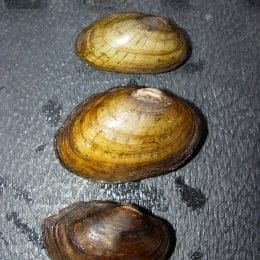
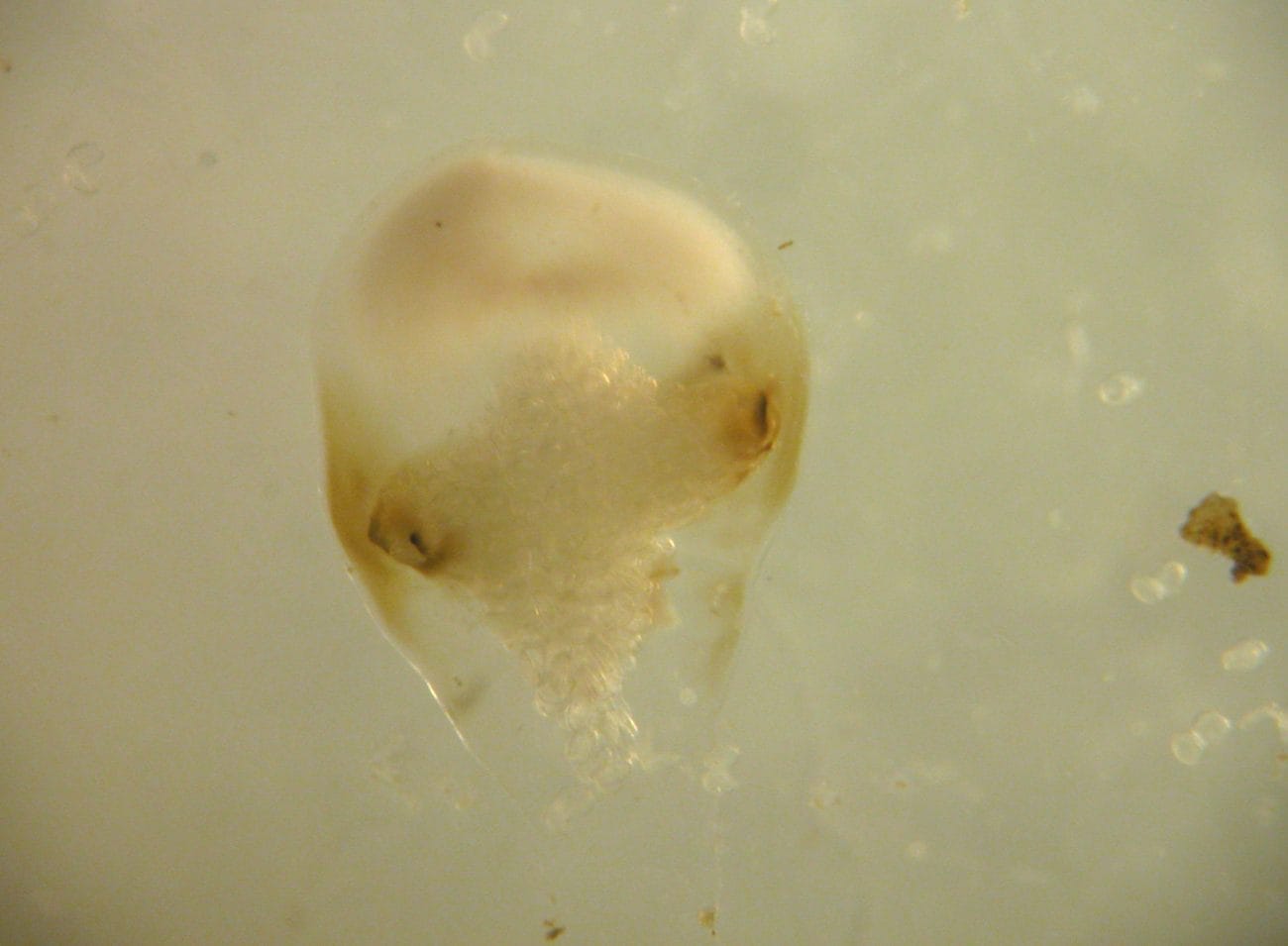
Freshwater Mussels in Alabama
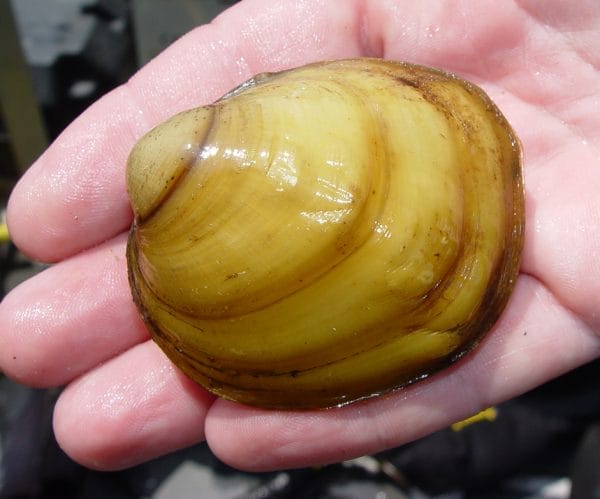 Sheepnose Mussel
Alabama is home to the most diverse fauna of freshwater mussels in all of North America, with 180 species. Foremost among the reasons for this great mussel diversity is the state’s abundant rivers and streams, many of which have been isolated from each other for millions of years. This isolation allowed mussels in each river to evolve independently of one another and resulted in the unique communities found in the separate drainage systems. Periodic connections between various rivers over geologic history have allowed some groups to mix to some degree. Many of the Alabama species occur nowhere else in the world. Alabama also escaped the drastic changes to the landscape that glaciers caused in northern areas of the continent. Underneath the leading edge of the glaciers, entire river systems disappeared as the ice advanced. New rivers formed as the glaciers receded, and mussels from the southern part of the continent later recolonized them. Because Alabama’s rivers are very old, speciation (evolution of new species) has occurred uninterrupted, resulting in an abundance of species.
Sheepnose Mussel
Alabama is home to the most diverse fauna of freshwater mussels in all of North America, with 180 species. Foremost among the reasons for this great mussel diversity is the state’s abundant rivers and streams, many of which have been isolated from each other for millions of years. This isolation allowed mussels in each river to evolve independently of one another and resulted in the unique communities found in the separate drainage systems. Periodic connections between various rivers over geologic history have allowed some groups to mix to some degree. Many of the Alabama species occur nowhere else in the world. Alabama also escaped the drastic changes to the landscape that glaciers caused in northern areas of the continent. Underneath the leading edge of the glaciers, entire river systems disappeared as the ice advanced. New rivers formed as the glaciers receded, and mussels from the southern part of the continent later recolonized them. Because Alabama’s rivers are very old, speciation (evolution of new species) has occurred uninterrupted, resulting in an abundance of species.
Biology
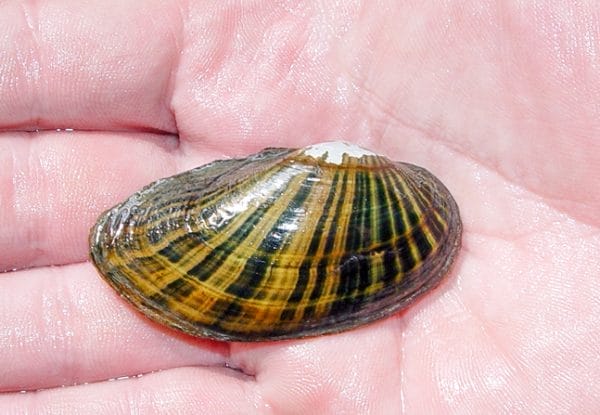 Shinyrayed Pocketbook
The term “freshwater mussels” is generally used to describe the order Unioniformes. Six families of freshwater mussels have been identified worldwide, two of which occur in Alabama: Margaritiferidae (2 species) and Unionidae (178 species). Freshwater mussels are mollusks that belong to the Class Bivalvia, which is characterized by two shells (also called valves) that are held together along one margin by a hinge ligament. Other characteristics of the group include a muscular foot with which the animals anchor themselves, thin membranous gills used for respiration, and a visceral mass, which contains most of the internal organs. The shell is comprised of nacre (mother of pearl) and is secreted by a thin membrane called the mantle that envelopes the soft tissues of the bivalve. Nacre is primarily calcium carbonate absorbed from the water in which the mussel lives. Powerful muscles are used to open and close the two valves.
Shinyrayed Pocketbook
The term “freshwater mussels” is generally used to describe the order Unioniformes. Six families of freshwater mussels have been identified worldwide, two of which occur in Alabama: Margaritiferidae (2 species) and Unionidae (178 species). Freshwater mussels are mollusks that belong to the Class Bivalvia, which is characterized by two shells (also called valves) that are held together along one margin by a hinge ligament. Other characteristics of the group include a muscular foot with which the animals anchor themselves, thin membranous gills used for respiration, and a visceral mass, which contains most of the internal organs. The shell is comprised of nacre (mother of pearl) and is secreted by a thin membrane called the mantle that envelopes the soft tissues of the bivalve. Nacre is primarily calcium carbonate absorbed from the water in which the mussel lives. Powerful muscles are used to open and close the two valves.
Most freshwater mussels can be distinguished from other bivalves by their unique “hinge teeth,” which are structures on the interior of the shell that help align the two valves when they are pulled closed. The structure of freshwater mussel hinge teeth differs from that of other freshwater and marine bivalves with hinge teeth.
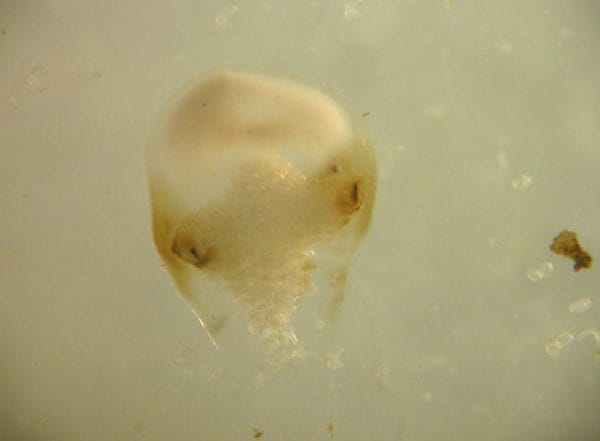
The life cycle of freshwater mussels is unique and also distinguishes them from all other bivalves. A freshwater mussel begins life as a parasitic larva, called a glochidium, which attaches to fish gills or fins, where it becomes embedded in a cyst and remains for several weeks to several months. Adult fish can carry up to 3,000 glochidium without harm. During the parasitic period, the glochidium transforms from a relatively simple larval structure to a self-sustaining juvenile with organ systems fully or partially developed. This developmental strategy not only provides the juvenile mussel with a safe place in which to develop, but often leads to offspring being dispersed far from the parent. This dispersal allows mussels to colonize new areas or establish sustaining populations farther upstream. Adult mussels seldom move more than a few feet during their life span.
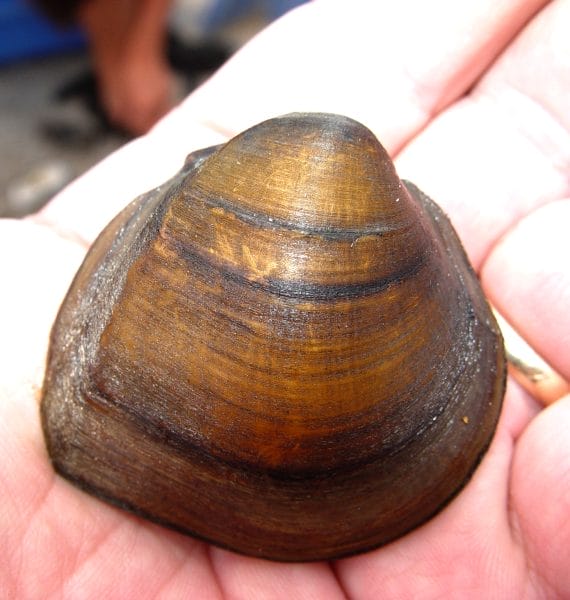 Wabash Pigtoe
Some mussel species have evolved strategies for increasing the likelihood that their larvae will attach to a suitable host. A few have developed elaborate lures that resemble the prey of predatory fish. When a fish investigates the lure, which may resemble a small fish, crayfish, or aquatic insect larvae, the mussel discharges its larvae into the water. Other mussel species package their larvae in intricate bundles called conglutinates, which also resemble insect larva and larval fish, that are discharged into the water. The conglutinates burst open when they are bitten by a fish, releasing the larvae, which then attach to the fish’s gills. A group containing four species, all of which occur in Alabama, discharge their entire annual quantity of conglutinates as a single structure called a superconglutinate. These structures remain attached to the female mussel by a pair of transparent mucus tubes and the action of water current makes them closely resemble small fish, which attracts potential hosts. Other mussel species simply discharge large numbers of glochidia into the water column and leave their destiny to chance.
Wabash Pigtoe
Some mussel species have evolved strategies for increasing the likelihood that their larvae will attach to a suitable host. A few have developed elaborate lures that resemble the prey of predatory fish. When a fish investigates the lure, which may resemble a small fish, crayfish, or aquatic insect larvae, the mussel discharges its larvae into the water. Other mussel species package their larvae in intricate bundles called conglutinates, which also resemble insect larva and larval fish, that are discharged into the water. The conglutinates burst open when they are bitten by a fish, releasing the larvae, which then attach to the fish’s gills. A group containing four species, all of which occur in Alabama, discharge their entire annual quantity of conglutinates as a single structure called a superconglutinate. These structures remain attached to the female mussel by a pair of transparent mucus tubes and the action of water current makes them closely resemble small fish, which attracts potential hosts. Other mussel species simply discharge large numbers of glochidia into the water column and leave their destiny to chance.
Human Exploitation
Freshwater mussels have long been important to humans. Native Americans consumed great quantities of them and left large piles of discarded shells (called shell middens) along many Alabama riverbanks. They also used the shells for tools and ornamentation for clothing and ceremonial objects and apparently treasured the pearls occasionally found in mussels.
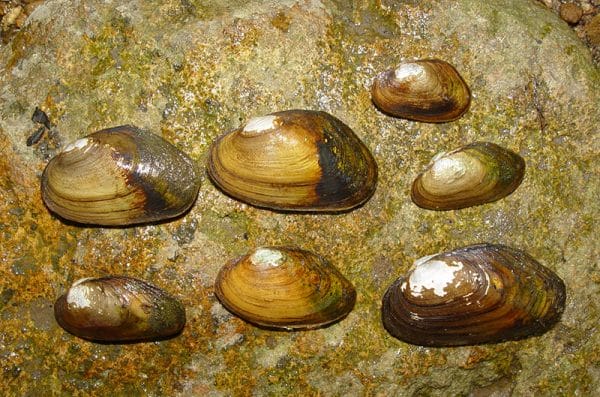 Tennessee Heelsplitter
During the late nineteenth century, freshwater mussel shell was found to be an excellent material for making buttons. The first pearl button factory opened in Iowa in 1891, and shells harvested from Alabama was used in some of those factories as early as 1904. By 1942, the Tennessee River, including the reach spanning north Alabama, was the primary producer of shell in the United States. Plastic buttons began to replace pearl buttons in the 1940s, but some pearl button factories remained in operation for several additional decades.
Tennessee Heelsplitter
During the late nineteenth century, freshwater mussel shell was found to be an excellent material for making buttons. The first pearl button factory opened in Iowa in 1891, and shells harvested from Alabama was used in some of those factories as early as 1904. By 1942, the Tennessee River, including the reach spanning north Alabama, was the primary producer of shell in the United States. Plastic buttons began to replace pearl buttons in the 1940s, but some pearl button factories remained in operation for several additional decades.
During the 1950s, an export market for U.S. mussel shell developed and continues today. The shell is used in the production of cultured pearls. Pearls are cultured by placing a mussel-shell bead, called a nucleus, under the mantle of a pearl oyster. The oyster lays down additional layers of nacre to surround the bead, which eventually produces a pearl. Cultured pearls may be produced in only a few years, whereas it takes many years to produce a natural pearl from a grain of sand or other small particle (often a microscopic parasite). The Tennessee River is the top producer of shells for the cultured pearl industry, and the section within Alabama provides a significant portion of the harvest. The annual export from Alabama is highly variable, but annual revenues have reached as high as $20 million.
Conservation
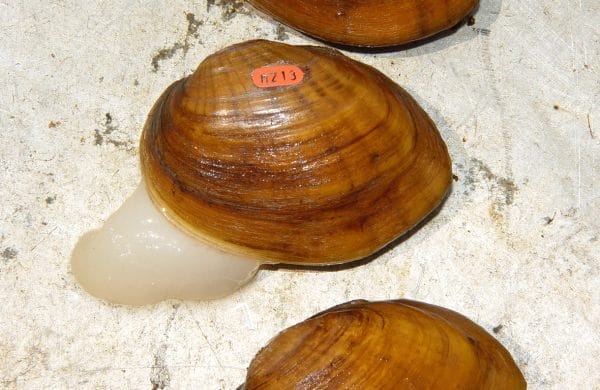 Pink Mucket
Most mussel species require habitat in rivers with clean water and gravel or sand bottoms. These conditions were prevalent in Alabama before the damming of most of its rivers in the early twentieth century, and mussels were found in virtually all streams throughout the state. The bottoms of the reservoirs created by the state’s numerous dams are generally covered with mud, however, and many mussel species cannot survive in this substrate. The few mussels that are tolerant of reservoir conditions are now more common than they were before the dams were built. But many of the species that require free-flowing water no longer occur in Alabama, and quite a few are believed by the scientific community to be extinct.
Pink Mucket
Most mussel species require habitat in rivers with clean water and gravel or sand bottoms. These conditions were prevalent in Alabama before the damming of most of its rivers in the early twentieth century, and mussels were found in virtually all streams throughout the state. The bottoms of the reservoirs created by the state’s numerous dams are generally covered with mud, however, and many mussel species cannot survive in this substrate. The few mussels that are tolerant of reservoir conditions are now more common than they were before the dams were built. But many of the species that require free-flowing water no longer occur in Alabama, and quite a few are believed by the scientific community to be extinct.
Alabama’s freshwater mussels have not fared well with other modern changes to their habitat, including water pollution, sedimentation (soil washed into the streams from eroding landscapes), and channel dredging. Non-indigenous species (those introduced from other regions) may also negatively impact freshwater mussels. Of the 180 mussel species so far recorded from Alabama, 22 are extirpated from the state (that is, they no longer occur here, but are found in other areas), and 27 are believed to be extinct. Alabama has suffered more mussel extinctions than any other state. Many of the species known from the state are federally endangered (39 species) or federally threatened (six species) and are protected by the federal Endangered Species Act. Another 40 species are recognized as imperiled in Alabama (although they may be common in other regions), whereas only 38 species in the state are now considered stable.
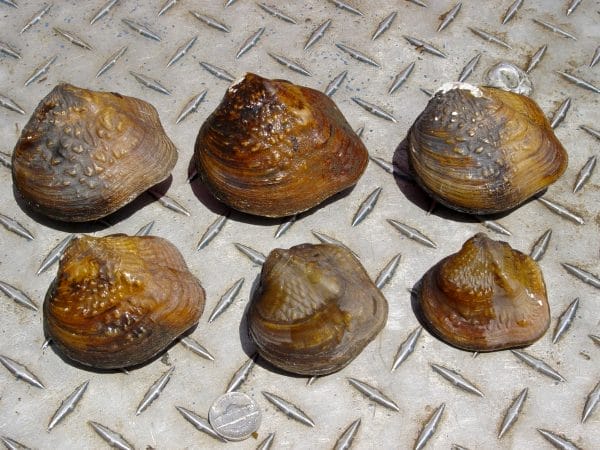 Monkeyface Mussels
Alabama conservationists believe there is hope for some imperiled species. Recent advances in rearing freshwater mussels in captivity have made juveniles available for release into the wild. The Alabama Aquatic Biodiversity Center, established in 2006 near Marion, Perry County, by the Alabama Department of Conservation and Natural Resources, houses the largest state nongame aquatic wildlife restoration program in the United States. Its primary focus is captive rearing of freshwater mussels and snails. Unfortunately, recovery efforts are limited by a scarcity of suitable habitats in which to release the mussels. Thus, conservation efforts for the immediate future are aimed at habitat improvements.
Monkeyface Mussels
Alabama conservationists believe there is hope for some imperiled species. Recent advances in rearing freshwater mussels in captivity have made juveniles available for release into the wild. The Alabama Aquatic Biodiversity Center, established in 2006 near Marion, Perry County, by the Alabama Department of Conservation and Natural Resources, houses the largest state nongame aquatic wildlife restoration program in the United States. Its primary focus is captive rearing of freshwater mussels and snails. Unfortunately, recovery efforts are limited by a scarcity of suitable habitats in which to release the mussels. Thus, conservation efforts for the immediate future are aimed at habitat improvements.
Further Reading
- Mirarchi, R. E., ed. Alabama Wildlife. Vol. 1, A Checklist of Vertebrates and Selected Invertebrates: Aquatic Mollusks, Fishes, Amphibians, Reptiles, Birds and Mammals. Tuscaloosa: University of Alabama Press, 2004.
- Mirarchi, R. E., et al., eds. Alabama Wildlife. Vol. 2, Imperiled Aquatic Mollusks and Fishes. Tuscaloosa: University of Alabama Press, 2004.
- Williams, J. D., A. E. Bogan, and J. T. Garner. Freshwater Mussels of Alabama and the Mobile Basin of Georgia, Mississippi and Tennessee. Tuscaloosa: University of Alabama Press, 2008.