Barber Vintage Motorsports Museum
 Barber Vintage Motorsports Museum
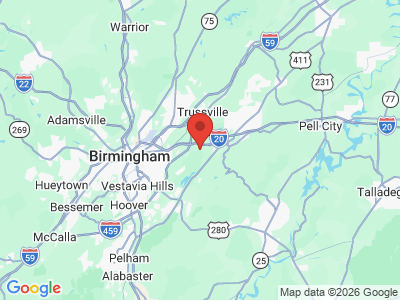
The Barber Vintage Motorsports Museum in Birmingham contains the largest motorcycle collection in the world and more Lotus competition cars than anywhere else in the United States. The passion project of former racecar driver and dairy industrialist George Barber, the collection exceeds 1,000 motorcycles, some more than 100 years old, displayed in the museum's five-story, 144,000-square-foot facility. Racing events, featuring vehicles from the museum's collections, are held at the racetrack that adjoins the museum.
Barber Vintage Motorsports Museum
The Barber Vintage Motorsports Museum in Birmingham contains the largest motorcycle collection in the world and more Lotus competition cars than anywhere else in the United States. The passion project of former racecar driver and dairy industrialist George Barber, the collection exceeds 1,000 motorcycles, some more than 100 years old, displayed in the museum's five-story, 144,000-square-foot facility. Racing events, featuring vehicles from the museum's collections, are held at the racetrack that adjoins the museum.
George Barber was born and raised in Birmingham and was a driver with the Sports Car Club of America through the 1960s. In 1972, after his father's death, he took over the family dairy business and soon expanded his interests to include real estate development. By the late 1980s, Barber had also begun collecting and restoring vintage cars. At the urging of his maintenance foreman, Dave Hooper, Barber began focusing on motorcycles, and his appreciation for their history and their accessible engineering increased with his collection. The costs of collecting vintage motorcycles generally run far below that of vintage cars, and it soon became Barber's goal to accumulate the most impressive collection in the world and create a museum celebrating the motorcycle.
 Displays at Barber
Barber initially stored his expanding collection of vehicles in a warehouse in Birmingham's Southside neighborhood. In 1994, he established the museum as a non-profit foundation, separate from his business ventures. On March 14, 1995, the facility opened to the public as a museum, with 325 motorcycles from around the world and a few vintage cars on display. The building also housed a library and fabrication, fiberglass, paint, and machine shops. The total collection exceeded 500 at the time, and the foundation began searching for a site for a larger facility. In 1998, Barber sold Barber Dairies, with annual sales exceeding $200 million, to Illinois-based Dean Foods Company. The museum at Southside closed in November 2002, and Barber invested about $54 million into what would become the Barber Motorsports Park and a new museum on 740 acres of rolling hills just east of downtown Birmingham. Barber was inducted into the American Motorcyclist Association Motorcycle Hall of Fame in October 2014.
Displays at Barber
Barber initially stored his expanding collection of vehicles in a warehouse in Birmingham's Southside neighborhood. In 1994, he established the museum as a non-profit foundation, separate from his business ventures. On March 14, 1995, the facility opened to the public as a museum, with 325 motorcycles from around the world and a few vintage cars on display. The building also housed a library and fabrication, fiberglass, paint, and machine shops. The total collection exceeded 500 at the time, and the foundation began searching for a site for a larger facility. In 1998, Barber sold Barber Dairies, with annual sales exceeding $200 million, to Illinois-based Dean Foods Company. The museum at Southside closed in November 2002, and Barber invested about $54 million into what would become the Barber Motorsports Park and a new museum on 740 acres of rolling hills just east of downtown Birmingham. Barber was inducted into the American Motorcyclist Association Motorcycle Hall of Fame in October 2014.
 Barber Racetrack
The present-day site features a 2.3-mile, 16-turn racetrack by premier designer Alan Wilson, a four-level paddock (where vehicles are prepared for racing), grassy hills where fans can view most of the track, and assorted sculptures, including three figures riding large wheels by Ted Gall near the entrance of the museum, metal flowers by William Colburn, and steel insects and birds by Bill Second. The track was built to meet the standards of the Fédération Internationale de l'Automobile (FIA) and the Fédération Internationale de Motocyclisme (FIM), the governing bodies of automobile and motorcycle racing. The park hosts professional races, such as the Honda Superbike Classic and the Grand-Am Cup, and the racetrack also hosts races that "exercise" the museum's motorcycles, which are kept in running order.
Barber Racetrack
The present-day site features a 2.3-mile, 16-turn racetrack by premier designer Alan Wilson, a four-level paddock (where vehicles are prepared for racing), grassy hills where fans can view most of the track, and assorted sculptures, including three figures riding large wheels by Ted Gall near the entrance of the museum, metal flowers by William Colburn, and steel insects and birds by Bill Second. The track was built to meet the standards of the Fédération Internationale de l'Automobile (FIA) and the Fédération Internationale de Motocyclisme (FIM), the governing bodies of automobile and motorcycle racing. The park hosts professional races, such as the Honda Superbike Classic and the Grand-Am Cup, and the racetrack also hosts races that "exercise" the museum's motorcycles, which are kept in running order.
 Vintage Lotus at Barber
The museum, which reopened on September 19, 2003, displays approximately 700 motorcycles, complemented by Barber's array of Lotus race cars, one of the largest such collections in the world. The display area has an open design of steel and concrete. A glass elevator large enough to transport vehicles rises through the exhibition area to the fifth floor, and motorcycles are displayed on each level. Restoration facilities are walled with glass so visitors can watch restorers at work. The museum's executive director, Jeff Ray, joined the organization as a mechanic in 1990, doing restoration work on Barber's collection. The building also includes library and research areas, and the basement provides space for vehicles not on display.
Vintage Lotus at Barber
The museum, which reopened on September 19, 2003, displays approximately 700 motorcycles, complemented by Barber's array of Lotus race cars, one of the largest such collections in the world. The display area has an open design of steel and concrete. A glass elevator large enough to transport vehicles rises through the exhibition area to the fifth floor, and motorcycles are displayed on each level. Restoration facilities are walled with glass so visitors can watch restorers at work. The museum's executive director, Jeff Ray, joined the organization as a mechanic in 1990, doing restoration work on Barber's collection. The building also includes library and research areas, and the basement provides space for vehicles not on display.