Coffee County
 Boll Weevil Monument
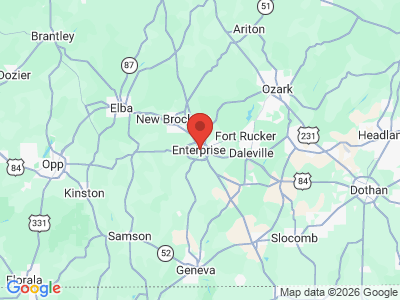
Located in the southeastern part of the state, Coffee County is home to part of the Fort Rucker Military Reservation and the Boll Weevil Monument. The county is governed by an elected seven-member commission and includes four incorporated communities.
Boll Weevil Monument
Located in the southeastern part of the state, Coffee County is home to part of the Fort Rucker Military Reservation and the Boll Weevil Monument. The county is governed by an elected seven-member commission and includes four incorporated communities.
- Founding Date: December 29, 1841
- Area: 680 square miles
- Population: 52,238 (2020 Census estimate)
- Major Waterways: Pea River
- Major Highways: I-84
- County Seat: Elba
- Largest City: Enterprise
History
 Coffee County Courthouse
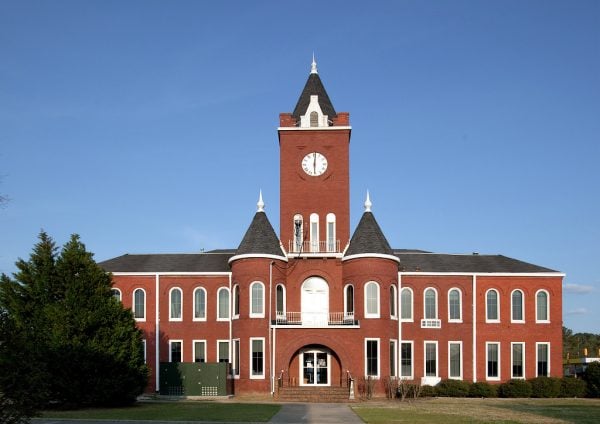
Coffee County was created by an act of the Alabama State Legislature on December 29, 1841, and was named for Gen. John Coffee, who fought in the Creek War of 1813-14. Originally part of Dale County, the first border of Coffee County extended to Florida. In 1868, the southern border of the county was used in the formation of Geneva County. The first county seat was located at Wellborn but was later moved to Elba in 1852. During the nineteenth and early twentieth centuries, Coffee County was a major cotton-growing area, but the arrival of the boll weevil in 1915 ruined the industry. After the cotton crop was completely destroyed in 1916, Coffee County farmers were forced to shift to a new crop. County extension agent John Pittman, inspired by George Washington Carver's research, introduced peanuts to the area, and the new staple crop proved successful. In 1919, Roscoe Fleming, a merchant in the town of Enterprise, erected a monument to commemorate the pest that forced the county to seek out new crops and gain new successes in farming. The Boll Weevil Monument holds the distinction as the only known monument erected to a pest.
Coffee County Courthouse
Coffee County was created by an act of the Alabama State Legislature on December 29, 1841, and was named for Gen. John Coffee, who fought in the Creek War of 1813-14. Originally part of Dale County, the first border of Coffee County extended to Florida. In 1868, the southern border of the county was used in the formation of Geneva County. The first county seat was located at Wellborn but was later moved to Elba in 1852. During the nineteenth and early twentieth centuries, Coffee County was a major cotton-growing area, but the arrival of the boll weevil in 1915 ruined the industry. After the cotton crop was completely destroyed in 1916, Coffee County farmers were forced to shift to a new crop. County extension agent John Pittman, inspired by George Washington Carver's research, introduced peanuts to the area, and the new staple crop proved successful. In 1919, Roscoe Fleming, a merchant in the town of Enterprise, erected a monument to commemorate the pest that forced the county to seek out new crops and gain new successes in farming. The Boll Weevil Monument holds the distinction as the only known monument erected to a pest.
 John Coffee
In 1936, the federal government's Farm Security Administration, in an effort to increase farm prices, purchased 32,000 acres of land on the eastern border of Coffee County that they planned to transform into a wilderness reservation. Known as Bear Farm, the land was transferred to the War Department in January 1942 to serve as a training site for soldiers during World War II. Named Camp Rucker for Confederate colonel Edmund Rucker, the training base became Fort Rucker in 1955. Fort Rucker became the Army Air Corp's headquarters when flight training was consolidated at the base in 1973. Air Force helicopter pilots have trained at the base since 1971. Fort Rucker straddles the borders of Houston, Dale, and Geneva Counties in addition to Coffee County. In March 2007, the county gained national attention when a tornado destroyed Enterprise High School and killed eight students.
John Coffee
In 1936, the federal government's Farm Security Administration, in an effort to increase farm prices, purchased 32,000 acres of land on the eastern border of Coffee County that they planned to transform into a wilderness reservation. Known as Bear Farm, the land was transferred to the War Department in January 1942 to serve as a training site for soldiers during World War II. Named Camp Rucker for Confederate colonel Edmund Rucker, the training base became Fort Rucker in 1955. Fort Rucker became the Army Air Corp's headquarters when flight training was consolidated at the base in 1973. Air Force helicopter pilots have trained at the base since 1971. Fort Rucker straddles the borders of Houston, Dale, and Geneva Counties in addition to Coffee County. In March 2007, the county gained national attention when a tornado destroyed Enterprise High School and killed eight students.
Major Cities and Demographics
According to 2020 Census estimates, Coffee County recorded a population of 52,238. Approximately 74.7 percent of respondents identified themselves as white, 17.0 percent as African American, 7.7 percent as Hispanic, 4.4 as two or more races, 1.6 percent as Asian, 1.0 percent as Native American. The county seat, Elba, had a population of 3,874. Other population centers in the county include Enterprise, New Brockton, and Kinston. The median household income was $56,799, compared with $52,035 for the state as a whole, and the per capita income was $27,912, compared with $28,934 for the state as a whole.
Geography
 Coffee County Map
Comprising approximately 680 square miles, Coffee County lies in the southern area of the state, wholly within the Coastal Plain physiographic section. Coffee County was carved out of the western portion of Dale County. It is bounded to north by Pike County, to the east by Dale County, to the south by Geneva County, and to the west by Covington and Crenshaw Counties. The Pea River, the largest tributary of the Choctawhatchee River, runs from north to south in the center of the county. Several smaller tributaries of the Pea River, including Double Bridges, Tight Eye, Beaverdam, Whitewater, Big, and Steep Head creeks, intersect the county. Interstate 84, running east-west in the southern half of the county, is the largest transportation route. Carl Folsom Airport and Enterprise Municipal Airport are the county's airports.
Coffee County Map
Comprising approximately 680 square miles, Coffee County lies in the southern area of the state, wholly within the Coastal Plain physiographic section. Coffee County was carved out of the western portion of Dale County. It is bounded to north by Pike County, to the east by Dale County, to the south by Geneva County, and to the west by Covington and Crenshaw Counties. The Pea River, the largest tributary of the Choctawhatchee River, runs from north to south in the center of the county. Several smaller tributaries of the Pea River, including Double Bridges, Tight Eye, Beaverdam, Whitewater, Big, and Steep Head creeks, intersect the county. Interstate 84, running east-west in the southern half of the county, is the largest transportation route. Carl Folsom Airport and Enterprise Municipal Airport are the county's airports.
Economy
 Coffee County Peanut Farmers
Coffee County had a largely agricultural economy during the nineteenth and early twentieth centuries. Although many farmers raised hogs and cattle, the major crop was cotton. In 1915, the arrival of the boll weevil changed Coffee County's economy forever. That year, the weevil destroyed more than 60 percent of the harvest. The following year, farmers planted a huge crop of cotton and attempted to combat the boll weevil, but these efforts failed, and virtually the entire cotton crop was destroyed. Coffee County farmers thus were forced to look for another staple crop and turned to the peanut. In 1917, county farmers grew and harvested the largest peanut crop—more than one million bushels for market—of any county in the nation, and peanuts remain the most important cash crop in the county. In 1911, the town of Elba became synonymous with Dorsey Trailers, a manufacturing company that produces hauling equipment, machinery trailers, truck bodies, and platforms. The main employer in Elba for the majority of the twentieth century, Dorsey Trailers closed in November 2000 and its assets were acquired by Street Asset Management in June 2001. Fort Rucker, constructed during World War II, is also a major employer.
Coffee County Peanut Farmers
Coffee County had a largely agricultural economy during the nineteenth and early twentieth centuries. Although many farmers raised hogs and cattle, the major crop was cotton. In 1915, the arrival of the boll weevil changed Coffee County's economy forever. That year, the weevil destroyed more than 60 percent of the harvest. The following year, farmers planted a huge crop of cotton and attempted to combat the boll weevil, but these efforts failed, and virtually the entire cotton crop was destroyed. Coffee County farmers thus were forced to look for another staple crop and turned to the peanut. In 1917, county farmers grew and harvested the largest peanut crop—more than one million bushels for market—of any county in the nation, and peanuts remain the most important cash crop in the county. In 1911, the town of Elba became synonymous with Dorsey Trailers, a manufacturing company that produces hauling equipment, machinery trailers, truck bodies, and platforms. The main employer in Elba for the majority of the twentieth century, Dorsey Trailers closed in November 2000 and its assets were acquired by Street Asset Management in June 2001. Fort Rucker, constructed during World War II, is also a major employer.
Employment
According to 2020 Census estimates, the workforce in Coffee County was divided among the following industrial categories:
- Educational services, and health care and social assistance (23.7 percent)
- Retail trade (12.2 percent)
- Manufacturing (11.3 percent)
- Public administration (9.2 percent)
- Transportation and warehousing, and utilities (9.2 percent)
- Professional, scientific, management, and administrative and waste management services (7.5 percent)
- Arts, entertainment, recreation, and accommodation and food services (7.1 percent)
- Other services, except public administration (5.2 percent)
- Construction (4.8 percent)
- Finance and insurance, and real estate, rental, and leasing (3.7 percent)
- Agriculture, forestry, fishing and hunting, and extractive (3.3 percent)
- Wholesale trade (2.0 percent)
- Information (0.9 percent)
Education
The Coffee County School System oversees four schools. In addition, the Elba City School System oversees three schools and the Enterprise City School System oversees 10 schools. Enterprise State Community College is a two-year public coeducational institution based in Enterprise.
Events and Places of Interest
The Pea River is ideal for fishing and is considered one of the best canoeing areas in south Alabama. Every spring, the town of Enterprise hosts the Piney Woods Art Festival, featuring local art, food, and live entertainment. The event is overseen by the Coffee County Arts Alliance. Visitors may view exhibits on the county's history at the Enterprise Depot Museum, which is also home to the Pea River Historical and Genealogical Society.
Additional Resources
- Heritage of Coffee County. Clanton, Ala.: Heritage Publishing Consultants Inc., 2004.
- Watson, Fred S. Coffee Grounds: A History of Coffee County, Alabama, 1841-1970. Anniston, Ala.: Higginbotham, Inc., 1970.