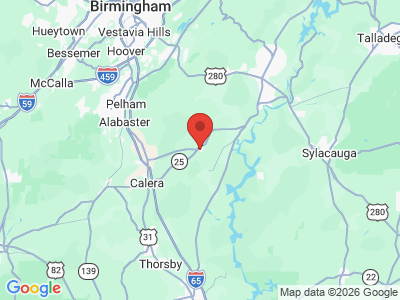
Shelby County
 Shelby County Museum and Archives
Located near the geographic center of the state, Shelby County is home to some of Alabama's most prosperous neighborhoods and largest populations of professional workers. Shelby County contains many of the richest mineral deposits in the state and was a center of industry during the late nineteenth century. The county is governed by an elected nine-member commission. The county includes 13 incorporated communities, each with a mayoral or mayor and city council form of government, as well as suburban parts of Birmingham, Hoover, and Leeds.
Shelby County Museum and Archives
Located near the geographic center of the state, Shelby County is home to some of Alabama's most prosperous neighborhoods and largest populations of professional workers. Shelby County contains many of the richest mineral deposits in the state and was a center of industry during the late nineteenth century. The county is governed by an elected nine-member commission. The county includes 13 incorporated communities, each with a mayoral or mayor and city council form of government, as well as suburban parts of Birmingham, Hoover, and Leeds.
- Founding Date: February 7, 1818
- Area: 800 square miles
- Population: 216,350 (2020 Census estimate)
- Major Waterways: Coosa River, Cahaba River
- Major Highways: I-65, U.S. 280, U.S. 231, U.S. 31
- County Seat: Columbiana
- Largest City: Alabaster
History
 Shelby County Courthouse
Shelby County was created by an act of the Alabama Territorial General Assembly that was approved February 7, 1818, preceding Alabama's statehood by almost two years. The county was originally one of the largest in the state, but the legislature carved out portions of Shelby County in successive acts when creating St. Clair, Jefferson, Talladega, and Chilton Counties. It was named in honor of Isaac Shelby (1750–1826), a Revolutionary War hero and first governor of Kentucky. The original county boundaries encompassed lands acquired from the Creek Indians in the 1814 Treaty of Fort Jackson following their defeat at the Battle of Horseshoe Bend. The initial non-Indian settlers came from Kentucky, South Carolina, and Tennessee. Many of them had served under Gen. Andrew Jackson at Horseshoe Bend and returned with their families after the war in 1815 and 1816, settling in the Cahaba Valley near Shoal Creek. The first towns in the Cahaba Valley were Wilson's Hill (now Montevallo) and Shelbyville (now Pelham). People also began settling the Coosa Valley, particularly in the vicinity of Bigs Springs (now Harpersville) and Wilsonville.
Shelby County Courthouse
Shelby County was created by an act of the Alabama Territorial General Assembly that was approved February 7, 1818, preceding Alabama's statehood by almost two years. The county was originally one of the largest in the state, but the legislature carved out portions of Shelby County in successive acts when creating St. Clair, Jefferson, Talladega, and Chilton Counties. It was named in honor of Isaac Shelby (1750–1826), a Revolutionary War hero and first governor of Kentucky. The original county boundaries encompassed lands acquired from the Creek Indians in the 1814 Treaty of Fort Jackson following their defeat at the Battle of Horseshoe Bend. The initial non-Indian settlers came from Kentucky, South Carolina, and Tennessee. Many of them had served under Gen. Andrew Jackson at Horseshoe Bend and returned with their families after the war in 1815 and 1816, settling in the Cahaba Valley near Shoal Creek. The first towns in the Cahaba Valley were Wilson's Hill (now Montevallo) and Shelbyville (now Pelham). People also began settling the Coosa Valley, particularly in the vicinity of Bigs Springs (now Harpersville) and Wilsonville.
 Isaac Shelby
Shelby County's court during the territorial period was located in Shelbyville at the home of William S. Wallace. Following statehood, Shelbyville became the first county seat, and in March 1820 the court approved construction of the county's first courthouse. This structure served as the county courthouse until 1826, when the decision was made to move the county seat and courthouse. Wilson's Hill and Columbia vied for the right to become the new county seat, and although Wilson's Hill was larger, Columbia was more centrally located and was supported by the residents of nearby Harpersville and Wilsonville. When Columbia was chosen as the new county seat, the celebratory explosions of gunpowder could be heard for miles. In 1832, the Alabama state legislature changed Columbia's name to Columbiana because the town of Columbia in Henry County laid prior claim to the name. An old wood-frame served as the county courthouse until 1854, when it was replaced by a brick structure that today houses the Shelby County Museum and Archives. The present courthouse was constructed in 1906. In June 2006 the centennial celebration of the building included the opening of a time capsule placed in the cornerstone in 1906 by members of the Alabama Masonic Grand Lodge. The town placed a new time capsule in the space, to be opened in 2106.
Isaac Shelby
Shelby County's court during the territorial period was located in Shelbyville at the home of William S. Wallace. Following statehood, Shelbyville became the first county seat, and in March 1820 the court approved construction of the county's first courthouse. This structure served as the county courthouse until 1826, when the decision was made to move the county seat and courthouse. Wilson's Hill and Columbia vied for the right to become the new county seat, and although Wilson's Hill was larger, Columbia was more centrally located and was supported by the residents of nearby Harpersville and Wilsonville. When Columbia was chosen as the new county seat, the celebratory explosions of gunpowder could be heard for miles. In 1832, the Alabama state legislature changed Columbia's name to Columbiana because the town of Columbia in Henry County laid prior claim to the name. An old wood-frame served as the county courthouse until 1854, when it was replaced by a brick structure that today houses the Shelby County Museum and Archives. The present courthouse was constructed in 1906. In June 2006 the centennial celebration of the building included the opening of a time capsule placed in the cornerstone in 1906 by members of the Alabama Masonic Grand Lodge. The town placed a new time capsule in the space, to be opened in 2106.
Major Cities and Demographics
 Helena Welcome Center
According to 2020 Census estimates the population of Shelby County was 216,350. Of that total, 79.8 percent of respondents identified themselves as white, 12.1 percent as African American, 5.7 percent as Hispanic, 2.0 percent as Asian, 3.1 percent as two or more races, and 0.4 percent as Native American. Hoover is the largest city in the county, with an estimated population of 85,386, but it straddles both Shelby and Jefferson Counties. The largest city located entirely within the county is Alabaster, with an estimated population of 33,373. The county seat Columbiana has an estimated population of 4,602. Other significant population centers include Pelham, Helena, Calera, Indian Springs Village, and Chelsea. The median household income for the county was $78,889, well above the state average of $52,035 for the state as a whole, and the per capita income was $39,711, compared with $28,934 for the state as a whole.
Helena Welcome Center
According to 2020 Census estimates the population of Shelby County was 216,350. Of that total, 79.8 percent of respondents identified themselves as white, 12.1 percent as African American, 5.7 percent as Hispanic, 2.0 percent as Asian, 3.1 percent as two or more races, and 0.4 percent as Native American. Hoover is the largest city in the county, with an estimated population of 85,386, but it straddles both Shelby and Jefferson Counties. The largest city located entirely within the county is Alabaster, with an estimated population of 33,373. The county seat Columbiana has an estimated population of 4,602. Other significant population centers include Pelham, Helena, Calera, Indian Springs Village, and Chelsea. The median household income for the county was $78,889, well above the state average of $52,035 for the state as a whole, and the per capita income was $39,711, compared with $28,934 for the state as a whole.
Economy
 Shelby Iron Works
Until well into the twentieth century, farming was the prevailing occupation in Shelby County. Cotton dominated agriculture until about 1900, when farmers diversified into corn, wheat, peanuts, soybeans, and vegetables. Early white settlers also quickly began taking advantage of the abundant minerals in the area, particularly iron ore and coal. As early as 1825, a Shelby County settler established a forge for making iron bar on Shoal Creek near Montevallo. Iron production increased in the late 1840s, when Horace Ware established the Shelby Iron Works near Columbiana. These facilities became a major supplier of coal to the Confederate ordnance installation at Selma during the Civil War. In 1851 William Phineas Browne, a lawyer and businessman from Vermont, opened the state's first large-scale, systematically run underground coal mines near Montevallo. Other minerals were important to the development of Shelby County, including limestone, which is important for smelting iron and cement manufacturing; barytes used in making paints, paper, and chemicals; and manganese used in the making of chemicals and steel.
Shelby Iron Works
Until well into the twentieth century, farming was the prevailing occupation in Shelby County. Cotton dominated agriculture until about 1900, when farmers diversified into corn, wheat, peanuts, soybeans, and vegetables. Early white settlers also quickly began taking advantage of the abundant minerals in the area, particularly iron ore and coal. As early as 1825, a Shelby County settler established a forge for making iron bar on Shoal Creek near Montevallo. Iron production increased in the late 1840s, when Horace Ware established the Shelby Iron Works near Columbiana. These facilities became a major supplier of coal to the Confederate ordnance installation at Selma during the Civil War. In 1851 William Phineas Browne, a lawyer and businessman from Vermont, opened the state's first large-scale, systematically run underground coal mines near Montevallo. Other minerals were important to the development of Shelby County, including limestone, which is important for smelting iron and cement manufacturing; barytes used in making paints, paper, and chemicals; and manganese used in the making of chemicals and steel.
Employment
According to 2020 Census estimates, the workforce in Russell County was divided among the following industrial categories:
- Educational services, and health care and social assistance (21.9 percent)
- Professional, scientific, management, and administrative and waste management services (11.7 percent)
- Retail trade (10.7 percent)
- Finance and insurance, and real estate, rental, and leasing (10.5 percent)
- Arts, entertainment, recreation, and accommodation and food services (8.8 percent)
- Manufacturing (7.6 percent)
- Construction (6.7 percent)
- Transportation and warehousing, and utilities (6.1 percent)
- Other services, except public administration (5.5 percent)
- Wholesale trade (4.0 percent)
- Public administration (3.6 percent)
- Information (2.0 percent)
- Agriculture, forestry, fishing and hunting, and extractive (0.8 percent)
Education
 Reynolds Hall
The Shelby County school system oversees 18 elementary and intermediary schools and 14 middle and high schools. The University of Montevallo, a liberal-arts college founded in 1896, is the county's only four-year institution of higher learning. Jefferson State Community College, a two-year institution, has a campus in Birmingham in North Shelby County.
Reynolds Hall
The Shelby County school system oversees 18 elementary and intermediary schools and 14 middle and high schools. The University of Montevallo, a liberal-arts college founded in 1896, is the county's only four-year institution of higher learning. Jefferson State Community College, a two-year institution, has a campus in Birmingham in North Shelby County.
Geography
 Shelby County Map
Comprising approximately 800 square miles, Shelby County lies at the southern end of the Appalachian mountain range within the Tennessee Valley and Ridge physiographic section. Double Oak Mountain divides the county into the Coosa Valley to the east and the Cahaba Valley to the west. It is bordered on the north and northwest by Jefferson County, on the west and southwest by Bibb County, on the south by Chilton County, on the southeast by Coosa County, on the east by Talladega County and on the northeast by St. Clair County.
Shelby County Map
Comprising approximately 800 square miles, Shelby County lies at the southern end of the Appalachian mountain range within the Tennessee Valley and Ridge physiographic section. Double Oak Mountain divides the county into the Coosa Valley to the east and the Cahaba Valley to the west. It is bordered on the north and northwest by Jefferson County, on the west and southwest by Bibb County, on the south by Chilton County, on the southeast by Coosa County, on the east by Talladega County and on the northeast by St. Clair County.
Two of the state's major rivers run through the county: the Coosa River on the southeastern border and the Cahaba River in the north. The Cahaba is one of the most ecologically important rivers in the nation and is home to 113 species of fish, including the rare Cahaba Shiner, which is found nowhere else in the world. Numerous tributaries of the Coosa and Cahaba Rivers offer scenic views, including waterfalls and stands of Cahaba lilies.
Interstate 65 is Shelby County's major transportation route, running north to south in the western part of the county. U.S. Highways 31 and 280 are the county's other major transportation arteries. The Shelby County Airport, located just off of Interstate 65 between Alabaster and Calera, is the county's only public airport.
Events and Places of Interest
 Alabaster Skate Park
Shelby County's diverse terrain offers many opportunities for recreational activities. Oak Mountain State Park in the northern part of the county is Alabama's largest state park. It encompasses almost 10,000 acres and provides visitors with such diverse activities as golfing, hiking, camping, canoeing, horseback riding, fishing, swimming, and mountain biking. The Cahaba River Wildlife Management Area located on County Road 91 west of Helena consists of 41,500 acres and offers excellent opportunities for hunting and fishing. Lay Lake, a 12,000-acre lake, has 289 miles of shoreline and has served as the host site for the Bass Masters Classic Tournament. Veterans Skate Park in Alabaster offers skateboarders a wide variety of features to practice stunts and tricks and also has picnic facilities and bleachers for viewing.
Alabaster Skate Park
Shelby County's diverse terrain offers many opportunities for recreational activities. Oak Mountain State Park in the northern part of the county is Alabama's largest state park. It encompasses almost 10,000 acres and provides visitors with such diverse activities as golfing, hiking, camping, canoeing, horseback riding, fishing, swimming, and mountain biking. The Cahaba River Wildlife Management Area located on County Road 91 west of Helena consists of 41,500 acres and offers excellent opportunities for hunting and fishing. Lay Lake, a 12,000-acre lake, has 289 miles of shoreline and has served as the host site for the Bass Masters Classic Tournament. Veterans Skate Park in Alabaster offers skateboarders a wide variety of features to practice stunts and tricks and also has picnic facilities and bleachers for viewing.
 American Village
One of the state's most unique tourist attractions is the American Village, near Montevallo, which is a living-history colonial village and park on 113 acres. The Karl C. Harrison Museum of George Washington, in nearby Columbiana, contains one of the largest privately owned collections of George and Martha Washington memorabilia outside of Mount Vernon. Columbiana is also home to the Shelby County Museum and Archives, located in the 1854 Courthouse. This museum displays artifacts and memorabilia from the early days of Shelby County and is the repository for many of the county's old court records dating as far back as 1818. Other points of interest include the Aldrich Coal Mine Museum near Montevallo, the Heart of Dixie Railroad Museum in Calera, Old Town Helena, the Shelby Iron Works near Columbiana, and the Shelby Springs Confederate Cemetery between Columbiana and Calera.
American Village
One of the state's most unique tourist attractions is the American Village, near Montevallo, which is a living-history colonial village and park on 113 acres. The Karl C. Harrison Museum of George Washington, in nearby Columbiana, contains one of the largest privately owned collections of George and Martha Washington memorabilia outside of Mount Vernon. Columbiana is also home to the Shelby County Museum and Archives, located in the 1854 Courthouse. This museum displays artifacts and memorabilia from the early days of Shelby County and is the repository for many of the county's old court records dating as far back as 1818. Other points of interest include the Aldrich Coal Mine Museum near Montevallo, the Heart of Dixie Railroad Museum in Calera, Old Town Helena, the Shelby Iron Works near Columbiana, and the Shelby Springs Confederate Cemetery between Columbiana and Calera.
Additional Resources
- Galloway, Eloise. History of Shelby County. Montevallo, Ala.: History Department, Alabama College, 1937.
- The Heritage of Shelby County, Alabama. Clanton, Ala.: n.p., 1999: 1–4, 8–10, 20–21.
External Links
- Shelby County
- Shelby County Schools
- Harrison Regional Library
- City of Alabaster
- City of Calera
- City of Chelsea
- City of Columbiana
- City of Harpersville
- City of Helena
- City of Indian Springs Village
- City of Montevallo
- City of Pelham
- City of Wilsonville
- Greater Shelby County Chamber of Commerce
- National Register of Historic Places: Shelby County
- University of Montevallo
- Jefferson State Community College
- American Village
- Shelby County Historical Society
- Karl C. Harrison Museum of George Washington
- Heart of Dixie Railroad Museum
- Oak Mountain State Park
- Cahaba River Wildlife Management Area