Clarke County
 Salt Works
Located in the southwestern area of the state, Clarke County's salt works, shipbuilding facilities, and sawmills were indispensable to the Confederacy during the Civil War. Once the home of the largest number of Works Progress Administration Rural Rehabilitation workers in the state, the county is a leader in Alabama's forestry industry. Renowned storyteller Kathryn Tucker Windham spent her childhood in Thomasville. The county is governed by an elected five-member commission.
Salt Works
Located in the southwestern area of the state, Clarke County's salt works, shipbuilding facilities, and sawmills were indispensable to the Confederacy during the Civil War. Once the home of the largest number of Works Progress Administration Rural Rehabilitation workers in the state, the county is a leader in Alabama's forestry industry. Renowned storyteller Kathryn Tucker Windham spent her childhood in Thomasville. The county is governed by an elected five-member commission.
- Founding Date: December 10, 1812
- Area: 1,230 square miles
- Population: 23,866 (2020 Census estimate)
- Major Waterways: Tombigbee River, Alabama River
- Major Highways: U.S. 43, U.S. 84
- County Seat: Grove Hill
- Largest City: Jackson
History
 Clarke County Historical Museum
Clarke County was created by the Mississippi Territorial Government on December 10, 1812, from lands taken from Washington County. The county was named for Revolutionary War soldier and Georgia Governor John Clarke. The area was claimed by both the Creeks and the Choctaws, with the watershed of the Alabama and Tombigbee rivers being the dividing line between the two. Non-Indian towns were located along the Alabama and Tombigbee during the initial years of settlement, and the opening of the Federal Road brought even more settlers. During the Creek War of 1813-14, settlers built several forts in Clarke County to protect themselves from attack. In September 1813, Fort Sinquefield was the site of an attack by a Creek war party in which several settlers were massacred. Two months later, in November, militia officer Samuel Dale led a force of 30 men, based at Fort Madison, against a Creek war party and engaged them in a skirmish aboard canoes in the Alabama River that became known as the "Canoe Fight." It would become the subject of much media coverage and legend in ensuing years. The Creeks ceded their lands in the county in the Treaty of Fort Jackson in 1814, and the Choctaws relinquished their land in the Treaty of Dancing Rabbit Creek in 1830.
Clarke County Historical Museum
Clarke County was created by the Mississippi Territorial Government on December 10, 1812, from lands taken from Washington County. The county was named for Revolutionary War soldier and Georgia Governor John Clarke. The area was claimed by both the Creeks and the Choctaws, with the watershed of the Alabama and Tombigbee rivers being the dividing line between the two. Non-Indian towns were located along the Alabama and Tombigbee during the initial years of settlement, and the opening of the Federal Road brought even more settlers. During the Creek War of 1813-14, settlers built several forts in Clarke County to protect themselves from attack. In September 1813, Fort Sinquefield was the site of an attack by a Creek war party in which several settlers were massacred. Two months later, in November, militia officer Samuel Dale led a force of 30 men, based at Fort Madison, against a Creek war party and engaged them in a skirmish aboard canoes in the Alabama River that became known as the "Canoe Fight." It would become the subject of much media coverage and legend in ensuing years. The Creeks ceded their lands in the county in the Treaty of Fort Jackson in 1814, and the Choctaws relinquished their land in the Treaty of Dancing Rabbit Creek in 1830.
 Clarke County Courthouse
During the Civil War, the county contributed 10 companies totaling approximately 1,100 men to the Confederacy. The state provided salt from salt works known as the "Upper Works" and the "Lower Works." Shipbuilding facilities and a steam-powered sawmill at Oven Bluff supplied the Confederacy with gunboats and building materials. As agriculture plummeted after the Civil War, the forestry industry, aided by the construction of the Mobile and Birmingham Railroad, boomed and became the top industry in the county.
Clarke County Courthouse
During the Civil War, the county contributed 10 companies totaling approximately 1,100 men to the Confederacy. The state provided salt from salt works known as the "Upper Works" and the "Lower Works." Shipbuilding facilities and a steam-powered sawmill at Oven Bluff supplied the Confederacy with gunboats and building materials. As agriculture plummeted after the Civil War, the forestry industry, aided by the construction of the Mobile and Birmingham Railroad, boomed and became the top industry in the county.
Major Cities and Demographics
According to 2020 Census estimates, Clarke County recorded a population of 23,866. Approximately 52.5 percent of respondents identified themselves as white, 45.7 percent as African American, 1.1 as two or more races, 0.6 percent as Hispanic, 0.5 percent as Asian, and 0.1 percent as Native American. The county seat, Grove Hill, had a population of 2,011. Other significant population centers in the county include Jackson, Thomasville, Coffeeville, and Fulton. The median household income in Clarke County was $37,345, as compared with $52,035 for the state as a whole, and the per capita income was $24,574, as compared with $28,934 for the state as a whole.
Economy
 Mount Nebo Cemetery
For its first 50 years, Clarke County was virtually covered in canebrakes, making large-scale plantation agriculture almost impossible. Despite this fact, farmers in the county, like those throughout Alabama, relied on cotton, along with some corn and wheat, as their primary agricultural product. By the 1850s, with the clearing of the canebrakes, the county saw an almost 55 percent increase in population. After the Civil War, with the decline in the value of cotton, Clarke County farmers tried to diversify their crops. At the turn of the century, the boll weevil ruined cotton farming and farmers began growing oats, wheat, corn, peanuts, pecans, peas, and potatoes, and began raising livestock, silkworms, and bees. Many also switched to the more lucrative timber industry, as Clarke County had an abundant supply of yellow pine.
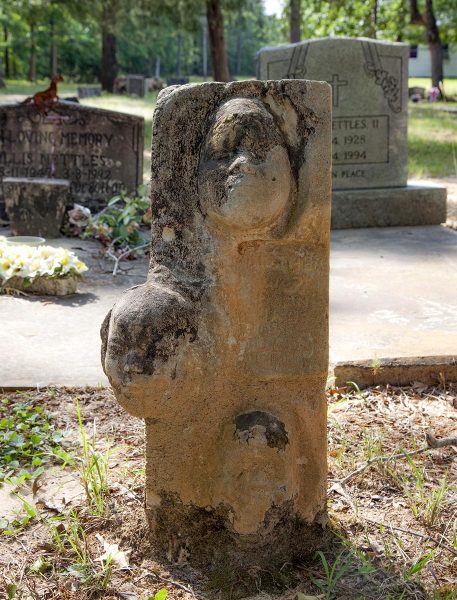
Mount Nebo Cemetery
For its first 50 years, Clarke County was virtually covered in canebrakes, making large-scale plantation agriculture almost impossible. Despite this fact, farmers in the county, like those throughout Alabama, relied on cotton, along with some corn and wheat, as their primary agricultural product. By the 1850s, with the clearing of the canebrakes, the county saw an almost 55 percent increase in population. After the Civil War, with the decline in the value of cotton, Clarke County farmers tried to diversify their crops. At the turn of the century, the boll weevil ruined cotton farming and farmers began growing oats, wheat, corn, peanuts, pecans, peas, and potatoes, and began raising livestock, silkworms, and bees. Many also switched to the more lucrative timber industry, as Clarke County had an abundant supply of yellow pine.
During the Great Depression, the forestry industry, along with agriculture, plunged into virtual economic ruin. Under the Works Project Administration poor farmers enrolled in the Works Project Administration Rural Rehabilitation Program. By 1934, Clarke County had more destitute farmers enrolled in its program than any other county in the state. After World War II, the forestry industry experienced another boom and today it remains the cornerstone of the rural county's economy. Paper mills soon became a significant source of employment, and as of 2001, four major mills—Boise Cascade, Alabama River Pulp, Weyerhaeuser, and Georgia Pacific—were located in Clarke County. In addition to the large mills, there are five major sawmills, one plywood mill, a veneer mill, and several textile plants.
Employment
According to 2020 Census estimates, the workforce in Clarke County was divided among the following industrial categories:
- Educational services, and health care and social assistance (21.5 percent)
- Manufacturing (20.6 percent)
- Retail trade (12.1 percent)
- Construction (9.4 percent)
- Transportation and warehousing, and utilities (6.0 percent)
- Other services, except public administration (5.2 percent)
- Finance and insurance, and real estate, rental, and leasing (5.1 percent)
- Agriculture, forestry, fishing and hunting, and extractive (5.0 percent)
- Arts, entertainment, recreation, and accommodation and food services (5.0 percent)
- Professional, scientific, management, administrative and waste management services (4.3 percent)
- Public administration (3.5 percent)
- Wholesale trade (1.5 percent)
- Information (0.6 percent)
Education
The Clarke County School System oversees nine schools. In addition, the Thomasville City School System oversees two schools. Clarke County also contains two private schools. Coastal Alabama Community College maintains campuses in both Thomasville and Jackson.
Geography
 Clarke County Map
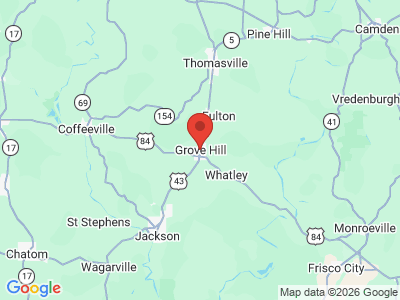
Comprising approximately 1,230 square miles, Clarke County lies in the southwestern area of the state within the East Gulf Coastal Plain physiographic section. It is bounded to the north by Marengo and Wilcox Counties, to the east by Monroe County, to the south by Baldwin County, and to the west by Washington and Choctaw Counties.
Clarke County Map
Comprising approximately 1,230 square miles, Clarke County lies in the southwestern area of the state within the East Gulf Coastal Plain physiographic section. It is bounded to the north by Marengo and Wilcox Counties, to the east by Monroe County, to the south by Baldwin County, and to the west by Washington and Choctaw Counties.
The Tombigbee River flows along the western edge of the county, and the Alabama River runs along the eastern edge before the two meet and form the Mobile River at Clarkes's southern end. Several tributaries of the rivers, including Jackson, Tattilaba, Bashi, and Bassett Creeks, cross the area. U.S. 43, running north-south, and U.S. 84 running east-west, are Clarke County's major transportation routes. Grove Hill Municipal Airport and Jackson Municipal Airport are the county's public airports.
Events and Places of Interest
 Kathryn Tucker Windham Museum in Thomasville
Because Clarke County is still relatively undeveloped, it offers numerous opportunities for outdoor recreation, including camping, fishing, and wildlife viewing. The Tombigbee River and the Alabama River have seven boat landings and offer fishing and water sports. The rivers are filled with game fish, including five types of bass, three types of catfish, white and black crappie, blue gill, and redear sunfish. Located near the town of Jackson is the Fred T. Simpson Wildlife Sanctuary, a 5,500 acre, hunting-prohibited habitat that is home to bobcat, coyote, fox, deer, rabbit, dove, and quail.
Kathryn Tucker Windham Museum in Thomasville
Because Clarke County is still relatively undeveloped, it offers numerous opportunities for outdoor recreation, including camping, fishing, and wildlife viewing. The Tombigbee River and the Alabama River have seven boat landings and offer fishing and water sports. The rivers are filled with game fish, including five types of bass, three types of catfish, white and black crappie, blue gill, and redear sunfish. Located near the town of Jackson is the Fred T. Simpson Wildlife Sanctuary, a 5,500 acre, hunting-prohibited habitat that is home to bobcat, coyote, fox, deer, rabbit, dove, and quail.
The Clarke County Historical Museum, housed in the circa-1854 Alston-Cobb House in Grove Hill, displays many artifacts and historical items, including prehistoric whale fossils. The Kathryn Windham Tucker Museum and Library is located at Alabama Southern Community College in Thomasville. Each November, the Clarke County Museum holds Pioneer Day to celebrate the folkways of early settlers.
Additional Resources
- Heritage of Clarke County, Alabama. Clanton, Ala.: Heritage Publishing Consultants, Inc., 2001.
- Jackson, Harvey H. The Mitcham War of Clarke County, Alabama. Grove Hill, Ala.: Clarke County Democrat, 1988.