Alabama Library Association
 ALLA Logo
Established in 1904, the Alabama Library Association (ALLA) is a non-profit organization dedicated to supporting the work of librarians, encouraging better use of libraries, and promoting and encouraging literary activities in Alabama. It is a member chapter of the American Library Association (established 1876) and a constituent state library association of the Southeastern Library Association (established 1920).
ALLA Logo
Established in 1904, the Alabama Library Association (ALLA) is a non-profit organization dedicated to supporting the work of librarians, encouraging better use of libraries, and promoting and encouraging literary activities in Alabama. It is a member chapter of the American Library Association (established 1876) and a constituent state library association of the Southeastern Library Association (established 1920).
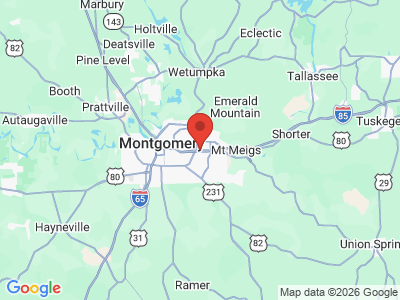
The Alabama Library Association was founded in Montgomery in 1904 as part of a national Progressive Era trend in professionalizing middle-class occupations and creating professional organizations to support them. ALLA boasted 50 charter members, including Thomas M. Owen, director and founder of the Alabama Department of Archives and History, who served as its first president. Other prominent founding members included his wife, Marie Bankhead Owen, director of the Alabama Department of Archives and History after his death, and several college and university presidents including John W. Abercrombie of the University of Alabama and Charles C. Thach of the Alabama Polytechnic Institute (now Auburn University).
 Thomas M. Owen at Work
ALLA's organizational structure reflects the varied interests found in the discipline of librarianship. The membership is currently split into three divisions: College, University, and Special Libraries; Public Libraries; and Youth Services and School Libraries. In addition, ALLA members are encouraged to join groups, called round tables, that focus on the more specialized interests of members, such as government documents, collection development, the role of paraprofessionals, and technical services and systems. ALLA is governed by an elected executive council that includes a president, president-elect, past president, secretary, treasurer, and three members-at-large. The presidency is rotated regularly among the three divisions. Much of ALLA's business, however, is conducted through approximately 20 committees. ALLA membership is open to any interested party, and the majority of members are employees of public libraries and academic libraries as well as a sizeable number of children's librarians, school librarians, and media specialists.
Thomas M. Owen at Work
ALLA's organizational structure reflects the varied interests found in the discipline of librarianship. The membership is currently split into three divisions: College, University, and Special Libraries; Public Libraries; and Youth Services and School Libraries. In addition, ALLA members are encouraged to join groups, called round tables, that focus on the more specialized interests of members, such as government documents, collection development, the role of paraprofessionals, and technical services and systems. ALLA is governed by an elected executive council that includes a president, president-elect, past president, secretary, treasurer, and three members-at-large. The presidency is rotated regularly among the three divisions. Much of ALLA's business, however, is conducted through approximately 20 committees. ALLA membership is open to any interested party, and the majority of members are employees of public libraries and academic libraries as well as a sizeable number of children's librarians, school librarians, and media specialists.
ALLA supports librarians in a number of ways through professional development workshops, an annual convention, and a variety of forums that allow members to share research on library-related issues. ALLA also serves as an advocacy group for library and educational interests and keeps members informed about important issues and trends in librarianship, for example, the impact of technological change and the need to encourage a more diverse, multicultural workforce in response to demographic changes in our society.
 Gretchen Knief Schenk
Throughout its history ALLA has addressed important national and regional issues affecting libraries and librarians. During the Great Depression, ALLA conducted a survey, titled "Library Needs of Rural Alabama," which examined the realities of providing library service in a poor rural state. The findings of the survey were presented in a report titled 33 Alabama Counties Are Without a Public Library: Books and Libraries—Alabama's Greatest Need. Beginning in 1949 ALLA also wrestled with issues surrounding racial segregation, but agreement on desegregation was not reached until late 1964. ALLA president Gretchen Schenk and the Executive Council began exploring the issue of admitting African American librarians as members but met with opposition from influential members such as Marie Bankhead Owen and Willam S. Hoole, director of the University of Alabama Library, and formal efforts to resolve the controversy ended in late 1952. Since 1944 African American librarians had been meeting as a departmental unit of the (African American) Alabama State Teachers Association, and in 1947 they established the Alabama Association of School Librarians. The topic of desegregation was revived in 1955 when the American Library Association approved a new constitution requiring all state chapters to be open to all persons interested in membership. Unable to comply, the Alabama Library Association withdrew its chapter status from the American Library Association until 1964. Partly in response to the signing of the federal Civil Rights Act that year, ALLA president Robert Severance and the executive council approved a motion opening membership to all interested persons regardless of race or color. Geraldine Bell of Miles College served as the first African American president of ALLA in 1991–92.
Gretchen Knief Schenk
Throughout its history ALLA has addressed important national and regional issues affecting libraries and librarians. During the Great Depression, ALLA conducted a survey, titled "Library Needs of Rural Alabama," which examined the realities of providing library service in a poor rural state. The findings of the survey were presented in a report titled 33 Alabama Counties Are Without a Public Library: Books and Libraries—Alabama's Greatest Need. Beginning in 1949 ALLA also wrestled with issues surrounding racial segregation, but agreement on desegregation was not reached until late 1964. ALLA president Gretchen Schenk and the Executive Council began exploring the issue of admitting African American librarians as members but met with opposition from influential members such as Marie Bankhead Owen and Willam S. Hoole, director of the University of Alabama Library, and formal efforts to resolve the controversy ended in late 1952. Since 1944 African American librarians had been meeting as a departmental unit of the (African American) Alabama State Teachers Association, and in 1947 they established the Alabama Association of School Librarians. The topic of desegregation was revived in 1955 when the American Library Association approved a new constitution requiring all state chapters to be open to all persons interested in membership. Unable to comply, the Alabama Library Association withdrew its chapter status from the American Library Association until 1964. Partly in response to the signing of the federal Civil Rights Act that year, ALLA president Robert Severance and the executive council approved a motion opening membership to all interested persons regardless of race or color. Geraldine Bell of Miles College served as the first African American president of ALLA in 1991–92.
In early 2005 the ALLA executive council officially opposed a bill filed (and later defeated) in the Alabama State Legislature that would have criminalized the use of public funds to purchase books and other library materials that offered a positive view of homosexuality. ALLA remains responsive to recent trends and developments in the library field. Examples include the establishment of the Multicultural Information Round Table in 2010, the renaming of the Paraprofessional Round Table to the Paralibrarian Round Table in 2015, and the establishment of the Scholarly Communication Round Table in 2024.
Like many other Republican-controlled states, Alabama libraries have had to contend with book banning and censorship attempts by conservative groups seeking to remove or restrict materials concerning sexuality and race, primarily in school and public libraries. In the spring of 2024, the Alabama House of Representatives passed House Bills 385 and 425, which would have expanded existing language regarding “exposure” of children to sexually explicit content to “presentations or activities” in schools, libraries, and other public places and would have subjected librarians convicted of such offenses to jail. Neither bill became law. Alabama Senate Bill 10 and House Bill 89 aimed to politicize the appointment of members to public library boards, but did not become law. Senate Bill 129, which was signed into law, prohibits public entities such as colleges and universities from promoting diversity, equity, and inclusion (DEI).
Libraries across the state have been the target of conservative action groups working to limit the availability of books deemed “divisive” or “sexually explicit.” For example, Autauga-Prattville Public Library was the target of the Moms for Liberty and Clean Up Alabama in 2023 and 2024, with the groups seeking to remove library materials pertaining to sexuality. Library director Andrew Foster was fired from his position by the board in March 2024 after he refused to remove the books and several other library employees were fired or resigned in support. Foster subsequently sued and settled without regaining his job. The Alabama Library Association, working with Read Freely Alabama, Democracy Forward, and other groups, has filed a suit against the Autauga-Prattville Public Library Board.
In 2024, Clean Up Alabama, along with conservative state legislators, successfully pressured the Alabama Public Library Service, the state agency that works with public libraries throughout the state, to disaffiliate from the American Library Association, which is perceived by conservative groups as contributing to the perceived problem of distributing obscene materials to children in school and public libraries. In response to such developments, the Alabama Library Association Executive Council produced an Alabama Library Bill of Rights, adopted July 5, 2024
Additional Resources
- Alabama Library Association, Inc. Alabama Library Association Handbook 2018 Revision. Montgomery: Alabama Library Association, Inc., 2018.
- ———. The Alabama Librarian (Dec. 1949-present). Montgomery: Alabama Library Association, Inc.
- Barrett, Kayla, and Barbara A. Bishop. “Integration and the Alabama Library Association: Not So Black and White.” Libraries and Culture: A Journal of Library History 33 (Spring 1998): 141-61.
- Proceedings of the First Meeting of the Alabama Library Association Montgomery, Alabama November 21, 1904. Montgomery: The Brown Printing Co., 1905.